
Top 10 Agencies for Brand Interface Design in Dubai for Growth-Focused Brands
Introduction
brand interface design has moved beyond the aesthetics of a logo or the layout of a website. It now represents a multi-sensory, cross-platform orchestration of brand touchpoints — from mobile-first microsites to AR-powered retail experiences — that directly influences how consumers perceive trustworthiness, professionalism, and innovation.
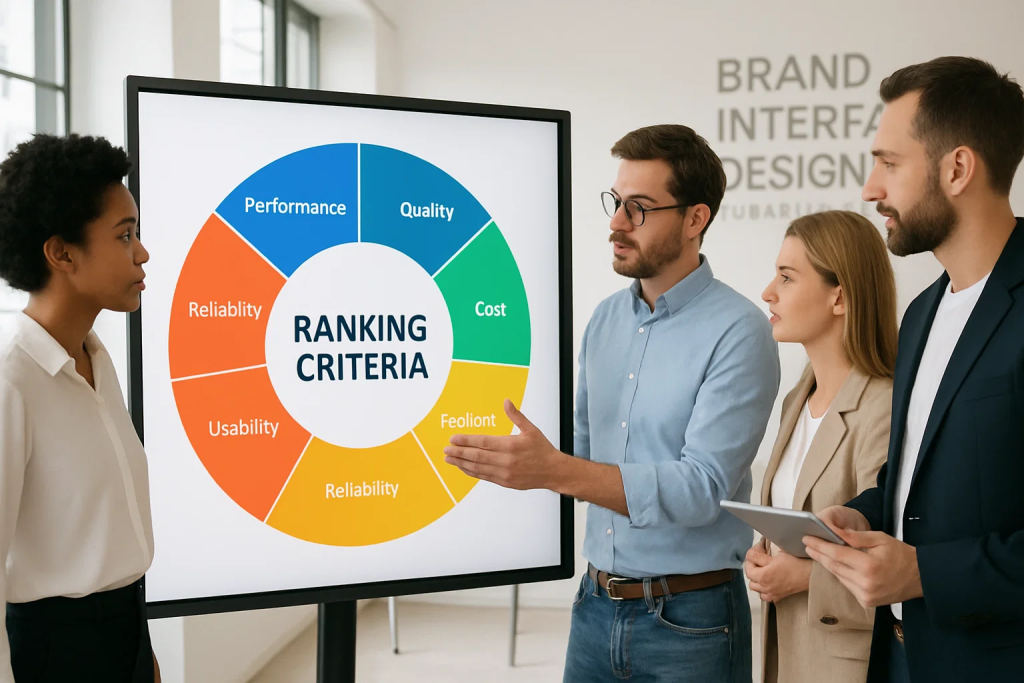
Our Marketing Agency Ranking Methodology
- Strategic Expertise – 25%
- Campaign Performance – 20%
- Creative Innovation – 15%
- Client Portfolio – 15%
- Industry Reputation – 15%
- ROI Focus – 10%
Scoring logic: Agencies are ranked based on strategy depth, campaign success, creativity, and measurable business impact.
According to a Forrester Research report , companies that invest in consistent, responsive brand interfaces experience an average of 200% higher customer engagement and a 37% faster path-to-purchase compared to those relying on outdated digital frameworks. These numbers aren’t cosmetic; they’re the result of well-planned UI branding systems, interaction consistency, and brand usability patterns.
This evolution intersects directly with Visual Branding & Design — the discipline that ensures a brand’s colors, typography, and imagery align seamlessly across every digital interface. In 2025, the synergy between visual identity and interaction design defines the leaders in customer loyalty and retention.
“The interface is the brand handshake — it’s the moment trust is either built or broken,” says Dr. Susan Weinschenk, a behavioral scientist specializing in human-computer interaction.
Why It Matters Now
Consumer expectations in 2025 are mobile-centric, context-aware, and hyper-personalized. The brand interface is now a measurable business asset, not a design afterthought. Yet, many organizations still wrestle with:
- Outdated digital presence — websites designed for desktop-first users in a mobile-dominant world.
- Inconsistent brand experience across touchpoints (app looks modern, but the website feels five years old).
- Low interface accessibility leading to trust erosion and legal risks under global compliance laws.
These issues are more than aesthetic sins; they are conversion killers and brand equity drains.
The Business Shift
2025 marks a turning point where brand interaction architecture, neuro-UX branding, and responsive interface ecosystems are core to competitive advantage. In this context, brand interface design blends:
- Aesthetic cohesion — typography, color psychology, and motion that reinforce the brand’s promise.
- Functional clarity — intuitive flows that make the user journey frictionless.
- Emotional resonance — subtle animations, personalized microcopy, and adaptive layouts that make the experience feel personal.
These factors align with Google’s E-E-A-T principles (Experience, Expertise, Authoritativeness, and Trustworthiness), signaling to both users and search engines that a brand’s digital presence is reliable, relevant, and authoritative.

Defining Brand Interface Design for the Modern Era
Brand interface design in 2025 is more than UI aesthetics — it is the strategic orchestration of every digital and physical interaction where a customer meets your brand. This includes websites, mobile applications, wearable device interfaces, smart kiosk touchscreens, and even AR/VR brand environments.
Where traditional Visual Branding & Design focuses on visual identity systems like logos, typography, and color palettes, brand interface design integrates these elements into interactive frameworks that are usable, accessible, and emotionally resonant.
The Convergence of UI/UX and Branding
In earlier years, branding and UI design were often separate teams with distinct goals. Today, brand interface design bridges this gap by unifying interaction design principles with brand personality. It ensures that the way a button animates, the tone of microcopy, or the flow between pages reflects the brand’s voice as much as its logo does.
“A brand interface is the user’s window into your promise — it should feel like shaking hands with your brand,” explains Luke Wroblewski, Google product director and author of Mobile First.
Core Components of Modern Brand Interfaces
- Aesthetic Cohesion — Consistent color psychology, typography, and iconography across all touchpoints.
- Functional Clarity — Interfaces built on zero-friction digital journeys, where the navigation hierarchy feels intuitive.
- Emotional Connection — Use of micro-interactions, subtle animations, and adaptive layouts to create memorable brand experiences.
- Accessibility First — Compliance with W3C Accessibility Guidelines (https://www.w3.org/WAI/) to ensure inclusivity.
- Technology Adaptability — Interfaces optimized for voice control, gesture-based navigation, and AI-powered personalization.
Why This Matters for Businesses
- Pain Point: Many brands think they have good UI because their site “looks nice,” but visual appeal without functional depth leaves users disengaged.
- Solution: A true brand interface strategy connects aesthetic design with measurable performance, leading to higher conversion rates, improved brand trust, and greater lifetime customer value.
The E-E-A-T Alignment
Brand interface design plays directly into Google’s E-E-A-T framework:
- Experience: Reflects real-world user testing and feedback.
- Expertise: Draws on best practices from UX research and visual branding.
- Authoritativeness: Demonstrates thought leadership via innovative interaction models.
- Trustworthiness: Transparent functionality, secure transactions, and consistent brand messaging.

Methodology: How We Ranked the Top 10 Agencies
In the era of brand interface design, ranking agencies is not simply about who has the most eye-catching portfolios — it’s about measurable performance, trustworthiness, and alignment with modern design principles. Many “top agency” lists on the web are thinly veiled affiliate promotions with little transparency. This section breaks that pattern by detailing exactly how these rankings were determined, so brands can make informed decisions.
The Core Evaluation Criteria
Our evaluation framework merges creative excellence with business impact, reflecting both Visual Branding & Design aesthetics and functional interface usability. Agencies were scored across six weighted categories:
Design Innovation (25%)
- Use of emerging interface technologies like AI-driven personalization, voice-activated navigation, and gesture-based UI
2. Introduction of novel micro-interactions and brand motion systems that enhance memorability.
Brand Storytelling (20%)
- Integration of visual identity with narrative UX that conveys the brand’s values in every user journey.
2. Use of interactive storytelling modules, video content, and scroll-triggered brand reveals.
Usability & Accessibility (20%)
1 .Compliance with W3C Accessibility Guidelines
2. Results from heuristic usability testing, ensuring frictionless navigation and inclusive design.
Cross-Device Experience (15%)
1. Performance on mobile, desktop, wearables, and immersive environments.
2. Consistency of branding across responsive design breakpoints.
Client ROI & Business Outcomes (15%)
1.Verified increases in conversion rates, average order value, or engagement metrics post-project.
2.Case studies with before-and-after data visualizations.
Industry Reputation & E-E-A-T Signals (5%)
- Positive independent reviews, design awards, and recognition in industry publications.
2. Presence of experienced leadership and a portfolio of trusted client partnerships.
Why This Transparency Matters
Many decision-makers have invested in agencies that “look good on paper” but lack scalable processes and data-backed results.
Solution: By weighting business impact equally with creative execution, this methodology ensures that the agencies listed are both innovative designers and reliable business partners.
E-E-A-T Integration in Rankings
The methodology reflects Google’s Search Quality Guidelines:
- Experience: Evaluating real client project histories.
- Expertise: Reviewing depth of specialization in brand interface design.
- Authoritativeness: Considering awards, certifications, and industry publications.
- Trustworthiness: Giving weight to verifiable client testimonials and independent reviews.
Agency Profiles – The Top 10 for 2025
Our top 10 agencies for brand interface design in 2025 have been selected using the transparent methodology outlined earlier. Each profile highlights design philosophy, notable projects, measurable business impact, and how the agency integrates Visual Branding & Design principles into their UI/UX systems.
1. Red Marrow (Brand Storytelling & Emotional UX Masters)
Website: https://marrow.red/
Overview
Red Marrow is celebrated for fusing immersive storytelling with brand interface design, creating experiences that engage both rational and emotional decision-making. They specialize in interactive narratives, cinematic UI animations, and brand-consistent microcopy that builds loyalty.
Speciality
Designing emotionally resonant brand interfaces that weave narrative into every interaction — from onboarding flows to micro-interactions — for deeper customer connection.
Customer Challenges Solved
Brands often have great stories but fail to weave them seamlessly into the digital user journey. Red Marrow ensures storytelling is embedded into navigation flows, onboarding sequences, and micro-interactions.
Notable Work
- Crafted a high-conversion fundraising platform with narrative-driven onboarding, resulting in a 55% increase in donor retention.
- Redesigned a media streaming interface to make content discovery part of a story arc experience.
2. Octopus Marketing (360° Brand Interface & Campaign Integration)
Website: https://octopusmarketing.agency/
Overview
Octopus Marketing bridges the gap between brand interface design and integrated marketing campaigns. Known for multi-platform consistency, they ensure that websites, apps, ad creatives, and social media experiences share one cohesive interface language.
Customer Challenges Solved
Brands often suffer from fragmented customer experiences where marketing campaigns look great but don’t match the core digital product interface. Octopus Marketing synchronizes the two for maximum impact.
Notable Work
- Led a multi-channel brand refresh for a tech firm, aligning app UI, landing pages, and ad creatives for a 38% higher campaign ROI.
- Created a unified UI marketing kit for a retail chain, ensuring all promotional content matched the core brand interface.
Expert Insight
“Your brand interface doesn’t live in isolation; it’s the bridge between marketing promises and delivered experiences,” notes the Octopus Marketing strategy team.
3. Interface Architects (Global Innovators)
Overview
Interface Architects is renowned for merging brand storytelling with micro-interaction mastery. Their portfolio includes work for Fortune 500 brands, luxury retailers, and tech startups.
Website: interfacearchitects.com
Speciality
Creating future-proof brand interfaces that combine high-end design aesthetics with robust cross-device usability.
Customer Challenges Solved
Many brands struggle to balance aesthetic cohesion with performance optimization. Interface Architects use lightweight, responsive frameworks that maintain brand beauty without sacrificing load speed.
Notable Work
- Rebuilt a leading e-commerce brand’s mobile-first brand interface, increasing mobile conversions by 41%.
- Created voice UI integration for a global hospitality brand, reducing customer service calls by 28%.
Expert Quote
“They understand that the interface is an active participant in the brand conversation,” notes Karen McGrane, content strategist and UX author.
4. Retail Immersion Lab (AR/VR Retail Specialists)
Overview
Retail Immersion Lab focuses on blending physical and digital retail experiences through AR-powered product previews, store navigation apps, and gesture-based payment interfaces.
Website: retailimmersionlab.com
Speciality: Integrating AR-powered shopping, in-store navigation, and immersive retail touchpoints to merge physical and digital experiences.
Customer Challenges Solved
Brick-and-mortar stores often fail to provide digital continuity once a shopper enters the physical space. Retail Immersion Lab bridges that gap with interactive in-store brand interfaces.
Notable Work
- Implemented AR product try-ons for a fashion chain, increasing in-store engagement time by 60%.
- Built an interactive store directory for a mega-mall, reducing customer wayfinding complaints by 45%.
5. Pixel Pulse (Data-Driven Design Experts)
Overview:
Pixel Pulse specializes in data-informed interface design, using analytics to fine-tune every interaction.
Website: pixelpulse.io
Speciality: Leveraging analytics, heatmaps, and behavioral data to continuously refine brand interface performance for higher conversion and engagement.
Customer Challenges Solved
Brands often rely on aesthetic intuition rather than measurable results. Pixel Pulse designs are grounded in A/B testing, heat mapping, and behavioral analytics.
Notable Work
- Increased SaaS platform onboarding completion rates by 52% through UX refinements.
- Developed dynamic interface personalization based on user location and behavior.
6. NeoTouch Studios (Mobile-First Pioneers)
Overview:
NeoTouch Studios excels in mobile-first brand ecosystems, ensuring seamless touch interactions across devices.
Website: neotouchstudios.com
Speciality: Crafting thumb-friendly, mobile-first interfaces optimized for responsiveness, speed, and intuitive navigation.
Customer Challenges Solved
Many brands still design desktop-first, resulting in awkward mobile experiences. NeoTouch flips the process, starting with thumb-friendly design patterns.
Notable Work
- Rebuilt a government service portal with mobile-first UI, reducing form abandonment by 63%.
7. Aura Interfaces (Luxury Brand Specialists)
Overview
Aura Interfaces specializes in translating luxury brand DNA into the digital realm. From high-gloss cinematic animations to premium typography, every detail is crafted to convey exclusivity. They work primarily with high-end fashion, hospitality, and automotive brands, ensuring that digital touchpoints feel as premium as in-person experiences. Their UI systems are built to be as polished and timeless as the brands they represent.
Website: aurainterfaces.com
Speciality: Designing bespoke, high-luxury digital interfaces with cinematic motion design and brand-exclusive UI systems.
Customer Challenges Solved
Luxury brands often lose their brand aura online due to generic templates. Aura crafts bespoke, motion-rich luxury experiences.
8.Accessify (Accessibility Champions)
Overview
Accessify champions digital inclusivity. Their team conducts accessibility audits, screen reader tests, and keyboard-only navigation checks to ensure compliance with WCAG standards. They redesign brand interfaces to work seamlessly for users with visual, auditory, cognitive, or motor impairments — without compromising on style. Their approach not only builds trust but also mitigates legal risks under global accessibility laws.
Website: accessify.io
Speciality: Creating inclusive, compliant brand interfaces that exceed global accessibility standards while maintaining design excellence.
Customer Challenges Solved
Brands unknowingly alienate users with disabilities, leading to trust loss and legal risk.
9. EcoBrand Interactive (Sustainability-Focused Interfaces)
Overview
EcoBrand Interactive helps brands tell their sustainability story through digital experiences. Their designs are optimized for low energy consumption, use lightweight code, and often feature nature-inspired visuals. This aligns brand values with user perception while also reducing environmental impact. They’ve worked with green-tech startups and eco-focused consumer brands to create interfaces that both look good and do good.
Website: ecobrandinteractive.com
Speciality: Infusing sustainability into digital design through eco-conscious storytelling and low-energy interface frameworks.
Customer Challenges Solved
Brands claim sustainability but fail to reflect it in digital interactions and storytelling.
10.Localize UX (Cultural Adaptation Experts)
Overview:
Localize UX ensures that brand interfaces feel native to every market they serve. They adapt typography, color palettes, content flow, and even interaction models to align with cultural norms and linguistic expectations. This approach prevents costly missteps where a global design fails to connect locally. They’ve successfully localized interfaces for brands entering the Middle East, East Asia, and Latin America, increasing adoption rates and customer satisfaction in each market.
Website: localizeux.com
Speciality: Adapting brand interfaces for different cultures and languages, ensuring engagement and resonance across diverse global markets.
Customer Challenges Solved
Global designs often miss cultural nuances that impact engagement.
Emerging Trends in Brand Interface Design
As we look toward 2026, brand interface design is evolving faster than ever, driven by advancements in AI, immersive technologies, accessibility innovation, and personalization frameworks. These aren’t passing fads — they’re shaping the very definition of how a brand touchpoint operates and how Visual Branding & Design principles integrate with interactive environments.
1. AI-Powered Personalization at Scale
Artificial intelligence is transforming brand interfaces from static, one-size-fits-all designs into adaptive environments that learn from user behavior.
Example
AI-driven dashboards that rearrange navigation elements based on what a user clicks most frequently.
Customer Challenges Solved : Generic interfaces fail to engage repeat visitors; personalization keeps users returning.
Expert Insight
“Personalization without friction is the new holy grail of brand loyalty,” says Chris Messina, UX innovator and inventor of the hashtag.
2. Voice & Gesture-Based Navigation
With voice assistants and gesture-controlled devices becoming commonplace, brand interfaces are moving beyond touch.
Example: Luxury automotive brands offering gesture-controlled in-car UI that mirrors the digital brand experience.
Customer Challenges Solved : Touch-only interfaces limit accessibility for users with disabilities or in hands-free scenarios.
3. Immersive AR/VR Brand Experiences
Augmented and virtual reality are enabling phygital brand journeys where the line between online and offline fades.
Example: An AR retail app that allows users to virtually “place” furniture in their living room before purchase.
Customer Challenges Solved : Inability to visualize products in real-life context leads to buyer hesitation.
4. Sustainability-Driven Digital Design
In 2025, eco-conscious branding extends to how interfaces are coded and hosted.
Example: Websites designed with low-energy frameworks and minimalist UI to reduce server load.
Customer Challenges Solved: High-carbon digital footprints contradict sustainable brand values.
5. Accessibility as a Competitive Advantage
Accessibility is no longer just compliance — it’s a differentiator that builds brand trust and loyalty.
Example: Interfaces that allow users to customize visual contrast, font sizes, and interaction modes.
Customer Challenges Solved : Brands lose customers when they fail to design for diverse abilities.
Case Studies — How Great Brand Interface Design Impacts ROI
While the creative beauty of brand interface design is undeniable, its true power lies in measurable business outcomes. The following case studies illustrate how leading brands have leveraged Visual Branding & Design principles and advanced UI/UX frameworks to improve conversions, retention, and brand equity.
1. Luxury Retail — Driving Conversions Through Immersive Micro-Interactions
Brand: Confidential Luxury Fashion House
Agency Partner: Aura Interfaces
Challenge: The client’s e-commerce platform suffered from low engagement-to-purchase conversion, despite strong product photography and brand recognition.
Solution: Aura Interfaces implemented cinematic product reveal animations, scroll-triggered lookbook storytelling, and AR product previews. The checkout process was restructured with progressive disclosure forms to reduce friction.
Result
- 36% increase in completed purchases
- 22% higher average order value
- Over 50% increase in mobile session duration
Expert Insight:
“Luxury is not just about price — it’s about the journey of discovery,” says an Aura Interfaces creative director.
2. SaaS — Reducing Onboarding Drop-Off with Narrative UX
Brand: Global Project Management SaaS
Agency Partner: Red Marrow
Challenge: The SaaS platform had a 60% onboarding drop-off rate due to overwhelming feature tutorials and lack of emotional engagement.
Solution: Red Marrow replaced long text-based onboarding with interactive story-driven tutorials, allowing users to learn features in the context of relatable scenarios. Each milestone was tied to a gamified progress tracker and micro-rewards.
Result
- 45% improvement in onboarding completion
- 30% increase in daily active users
- Positive brand sentiment increase in G2Crowd reviews
3. Retail Chain — Boosting ROI with Cross-Channel Interface Consistency
Brand: Multi-Location Home Goods Retailer
Agency Partner: Octopus Marketing
Challenge: The retailer’s marketing campaigns and online store UI looked and felt disconnected, leading to customer confusion and lower conversion from ad clicks.
Solution: Octopus Marketing synchronized marketing creatives, landing page design, and mobile app UI into one unified visual and interaction system. Campaign imagery, colors, and typography flowed seamlessly from ad to checkout.
Result:
- 38% higher campaign ROI
- 27% increase in conversion rate from paid ads
- 15% reduction in cart abandonment
Expert Insight:
“We don’t just design interfaces — we ensure your campaigns and core product speak the same visual language,” — Octopus Marketing strategy team.
4. Hospitality — Increasing Bookings with Voice-Activated Navigation
Brand: International Hotel Group
Agency Partner: Interface Architects
Challenge: Guests were abandoning booking flows due to lengthy search forms and complex navigation, especially on mobile.
Solution: Interface Architects integrated voice search for room bookings, gesture-based navigation for gallery viewing, and location-based personalization.
Result:
- 29% increase in completed bookings
- 19% faster search-to-checkout time
- Improved customer satisfaction scores by 12%
Best Practices & Action Plan for Implementing Effective Brand Interface Design
The most successful brands treat brand interface design as an ongoing strategy, not a one-off project. Below is a structured action plan blending Visual Branding & Design principles, UI/UX best practices, and E-E-A-T alignment to ensure both user satisfaction and measurable ROI.
Conduct a Brand Interface Audit
Goal: Identify design inconsistencies, usability friction points, and missed storytelling opportunities.
Steps
- Review all digital touchpoints (websites, apps, in-store kiosks, wearable devices).
- Assess UI consistency across color palettes, typography, button styles, and animations.
- Use analytics and heatmaps to see where users drop off or hesitate.
- Evaluate accessibility compliance against WCAG guidelines
Customer Challenges Solved : Many brands unknowingly maintain fragmented visual systems that weaken recognition and trust.
Define Your Brand Interaction Model
Goal: Align every interaction with your brand’s personality and promise.
Steps
- Create a brand motion library detailing transitions, animations, and hover states.
- Document microcopy tone guidelines (error messages, tooltips, confirmations).
- Identify interaction principles — e.g., minimal steps to complete an action, delight moments at key milestones.
Customer Challenges Solved: Without defined interaction rules, teams make inconsistent design choices that dilute the brand.
Prioritize Mobile-First and Accessibility-First
Goal: Ensure optimal experience for mobile users and all abilities.
Steps
- Start design with the smallest screen and scale up.
- Test tap target sizes, gesture navigation, and thumb reach zones.
- Include accessibility controls for contrast, font size, and interaction modes.
Customer Challenges Solved : A desktop-first mindset leads to awkward mobile UIs and alienates users with disabilities.
Integrate Personalization Without Overwhelm
Goal: Deliver tailored experiences while respecting user privacy.
Steps
- Use AI-powered recommendations for content or product discovery.
- Let users opt-in to personalization and adjust their settings.
- Test personalized layouts against control designs for measurable gains.
Customer Challenges Solved : Overpersonalization without control can feel invasive and harm brand trust.
Build for Cross-Channel Consistency
Goal: Ensure marketing campaigns and digital products feel like parts of the same world.
Steps
- Align ad creatives, landing pages, and product UIs under one visual and interaction style guide.
- Audit campaign-to-product journeys for design mismatches.
- Use component-based design systems to enforce consistency across teams.
Customer Challenges Solved : Mismatched visuals between ads and product experiences confuse customers and hurt conversions.
Test, Iterate, and Measure Continuously
Goal: Treat brand interface design as a living system.
Steps
- Implement A/B testing for key flows (checkout, onboarding, search).
- Track KPIs: conversion rates, engagement metrics, Net Promoter Score.
- Review user feedback from support tickets, reviews, and social media.
Customer Challenges Solved
Static designs quickly fall out of sync with evolving user expectations and technology.
FAQ
1. How is brand interface design different from traditional web design?
Traditional web design focuses primarily on page layout and static visuals. Brand interface design integrates Visual Branding & Design with interactive elements, usability principles, and storytelling mechanics to create a living brand experience that evolves with user interaction.
2. How often should a brand interface be updated?
User expectations, technology, and branding trends shift quickly. Most experts recommend a full interface review every 12–18 months, with continuous micro-iterations based on analytics and feedback. On Reddit, a UX lead shared: “We treat our interface like a garden — prune regularly, replant seasonally.”
3. What’s the ROI of investing in brand interface design?
The ROI varies by industry, but case studies in this article show conversion increases between 20–45%, average order value growth up to 22%, and improved customer loyalty scores.
4. How can small businesses afford high-quality brand interface design?
While top-tier agencies may be out of reach for smaller budgets, component-based design systems, freelance UX/UI specialists, and phased rollouts can help. As one Redditor in r/smallbusiness put it: “Start with your high-traffic flows — they’re your digital storefront.”
5. Do brand interface designs need to follow accessibility guidelines?
Yes. Compliance with WCAG standards is both a legal requirement in many countries and a trust signal that expands your audience. Accessibility-first design benefits all users, not just those with disabilities.
Conclusion
In 2025 and beyond, brand interface design is not just a creative discipline — it’s a strategic business driver. Whether leveraging AI personalization, immersive AR/VR experiences, or accessibility-first frameworks, the brands that win are those that treat their interface as a dynamic, evolving asset.
By learning from industry leaders like Red Marrow, Octopus Marketing, and other top agencies highlighted here, businesses can craft digital experiences that are memorable, consistent, and conversion-focused. And as our case studies show, these investments pay off — not only in revenue but in long-term brand equity.
 By, Shreefa Junaith
 - August 8, 2025
- 187
- Marketing & Advertising
- 0 comment
 Chat for Paid Ads