
Top 10 Towers in Dubai: The Tallest, Most Iconic Skyscrapers
Introduction
Dubai’s skyline is the result of a deliberate economic and architectural strategy, not accidental growth. With more than 250 skyscrapers over 150 meters and over 30 towers exceeding 300 meters, Dubai ranks among the world’s most vertically dense cities. The top 10 tower Dubai ecosystem reflects a convergence of urban economics, structural engineering, tourism-driven development, and global city branding, where height functions as both infrastructure and identity.
Super-tall and mixed-use towers in Dubai optimize limited coastal land, reduce per-capita infrastructure cost, and amplify land value within surrounding districts by up to 35%, according to urban real-estate impact studies. Rather than isolated buildings, Dubai’s tallest towers operate as integrated vertical systems—combining residential, commercial, and hospitality functions to maximize economic yield per square meter.
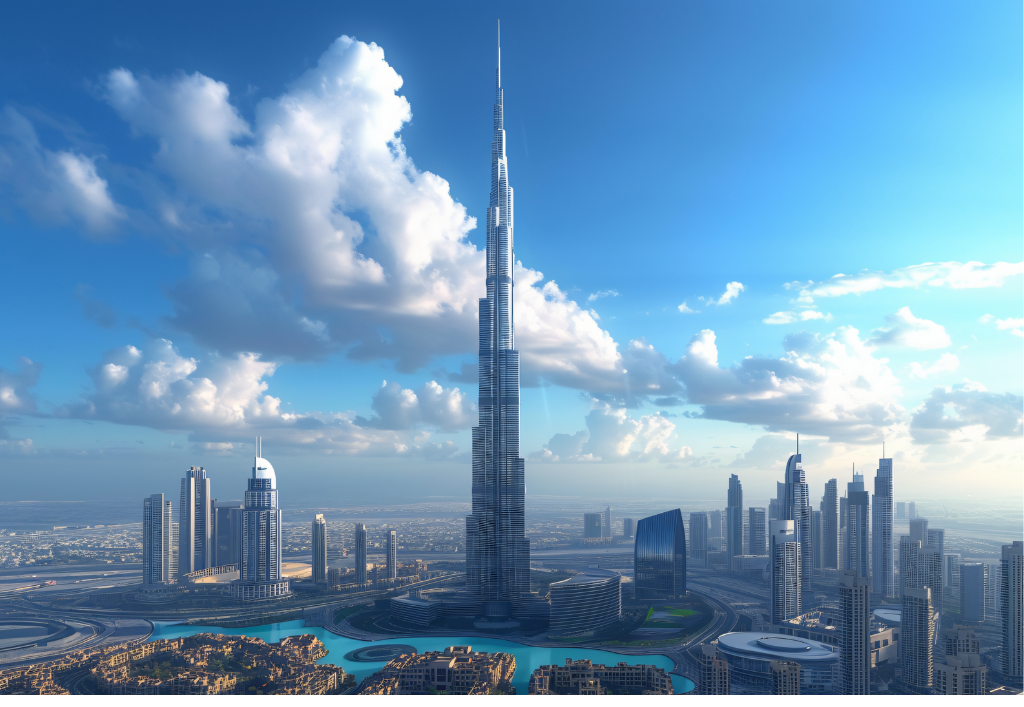
This article ranks the Top 10 Towers in Dubai using verified height standards and contextual relevance, resolving common confusion around tallest buildings in Dubai, iconic towers, and why some structures matter beyond pure height.
Top 10 Towers in Dubai
1. Burj Khalifa – The World’s Tallest Tower
The Burj Khalifa is the tallest building in the world, rising to 828 meters with 163 occupied floors. Located in Downtown Dubai, it was completed in 2010 and immediately became the defining landmark of the city. In any top 10 tower Dubai ranking, Burj Khalifa stands as the global benchmark for height, ambition, and engineering excellence.
Key Features
Burj Khalifa is built using an innovative buttressed core structural system, designed to resist extreme wind loads at high altitude. The tower features a Y-shaped floor plan, tapering setbacks, high-speed elevators, and advanced façade technology to manage heat and wind pressure. These features set new standards for supertall skyscraper design worldwide.
Usage & Experience
The tower is a mixed-use skyscraper, housing luxury residences, corporate suites, the Armani Hotel, and world-famous observation decks on levels 124, 125, and 148. Its observation decks offer panoramic views across Dubai, making it the most visited tower in the city.
Cultural & Economic Significance
Beyond height, Burj Khalifa transformed Dubai’s global image and elevated Downtown Dubai into the city’s most valuable real estate district. It functions as both an architectural icon and an economic catalyst, symbolizing Dubai’s rise as a global city rather than just a regional hub.
2. Marina 101 – Dubai’s Tallest Residential Skyscraper
Marina 101 is the tallest residential tower in Dubai, standing at approximately 425 meters with 101 floors. Located in the heart of Dubai Marina, it is one of the most prominent names after Burj Khalifa in any top 10 tower Dubai discussion. Designed primarily for residential use, Marina 101 represents Dubai’s push toward ultra-luxury vertical living rather than mixed-use symbolism.
Key Features
The tower is defined by its high floor-to-floor height, expansive balconies, and panoramic glass façade offering unobstructed views of the Arabian Gulf and Dubai Marina skyline. Structurally, Marina 101 was engineered to support residential comfort at extreme heights, incorporating advanced wind-dampening systems, high-speed elevators, and reinforced concrete cores typical of supertall residential towers.
Usage & Living Experience
Marina 101 is predominantly residential, featuring luxury apartments, serviced residences, and penthouses at upper levels. Unlike commercial skyscrapers, the building prioritizes privacy, spacious interiors, and lifestyle amenities, catering to high-net-worth residents seeking prestige addresses in Dubai Marina.
Cultural & Real Estate Significance
Marina 101 holds importance not just for its height but for redefining residential skyscraper limits in Dubai. It elevated Dubai Marina’s global profile as a luxury residential district and remains a benchmark for developers aiming to build tall residential towers that compete on both height and livability, not symbolism alone.
3. Princess Tower – Once the World’s Tallest Residential Tower
Princess Tower stands at 413 meters with 101 floors and is located in Dubai Marina. Completed in 2012, it once held the title of the world’s tallest residential tower, a distinction that cemented its place among the most important names in any top 10 tower Dubai ranking. Even after losing the global record, it remains one of the most recognizable residential skyscrapers in the city.
Key Features
Princess Tower is defined by its slender vertical profile, neo-classical crown design, and reinforced concrete structural system built for high-altitude residential stability. The tower includes multiple swimming pools, gyms, retail spaces, and high-speed elevators engineered to efficiently serve a dense residential population—key features for super-tall residential buildings.
Usage & Living Experience
The tower is entirely residential, offering one-, two-, and three-bedroom apartments as well as duplex penthouses on higher floors. Its location provides residents with direct access to Dubai Marina’s waterfront lifestyle, combining height with urban convenience and panoramic sea views.
Cultural & Real Estate Significance
Princess Tower holds lasting significance as a milestone in residential high-rise history. It demonstrated that residential towers could compete with commercial skyscrapers in height while remaining functional and desirable. For many investors and residents, it represents the moment Dubai Marina emerged as a global luxury residential district, not just a scenic waterfront area.
4. 23 Marina – Engineering a Vertical Residential Giant
23 Marina rises to approximately 393 meters with 89 floors, making it one of the tallest purely residential towers in Dubai. Situated along Dubai Marina, the tower is named after its original plot number and is widely recognized in any top 10 tower Dubai list for pushing structural limits in residential high-rise construction.
Key Features
What sets 23 Marina apart is its exceptionally high floor-to-floor height, among the tallest for residential buildings globally. This design allows for larger apartments and duplex units, even at extreme elevations. The tower incorporates a reinforced concrete core, advanced wind-load engineering, and high-speed elevator systems optimized for residential use—features critical for stability and comfort in supertall residential skyscrapers.
Usage & Living Experience
23 Marina is exclusively residential, offering spacious apartments and duplex penthouses with expansive layouts rarely seen at such heights. Residents benefit from private elevators for select units, wellness facilities, and uninterrupted views of the marina, Palm Jumeirah, and Arabian Gulf, emphasizing livability over density.
Cultural & Real Estate Significance
23 Marina represents a shift in Dubai’s skyline philosophy—from building taller to building better at height. It proved that extreme vertical living could deliver space, privacy, and comfort, influencing later luxury residential towers in Dubai Marina. For investors and architects alike, it stands as a case study in how engineering precision can redefine residential skyscraper standards.
5. Elite Residence – Luxury Living at Vertical Extremes
Elite Residence stands at approximately 381 meters with 87 floors and is located in Dubai Marina, directly facing the Palm Jumeirah. Completed in 2012, it consistently ranks among the most prominent buildings in any top 10 tower Dubai list. While slightly shorter than Marina 101 and Princess Tower, Elite Residence is widely regarded as one of the most refined luxury residential skyscrapers in the city.
Key Features
The tower features a sleek glass-and-concrete façade, aerodynamic form, and a structurally optimized reinforced concrete core designed to reduce wind-induced sway. High-speed elevators, advanced fire safety systems, and premium finishing materials distinguish Elite Residence from earlier residential high-rises. Its architectural emphasis balances structural efficiency with visual elegance, a key reason it remains competitive among newer towers.
Usage & Living Experience
Elite Residence is entirely residential, offering high-end apartments and penthouses with expansive balconies and floor-to-ceiling windows. Residents enjoy amenities such as indoor and outdoor swimming pools, fitness centers, spa facilities, and concierge services. The building prioritizes luxury lifestyle and comfort, appealing to long-term residents rather than short-stay visitors.
Cultural & Real Estate Significance
Elite Residence helped redefine Dubai Marina as a luxury residential enclave rather than just a high-density waterfront district. Its success demonstrated that premium finishes, location, and lifestyle amenities could rival sheer height in determining a tower’s prestige. For investors, it remains a stable benchmark for high-value residential property in Dubai’s skyline.
6. Almas Tower – Dubai’s Tallest Commercial Tower
Almas Tower stands at 363 meters with 68 floors and is located in Jumeirah Lakes Towers (JLT). Completed in 2008, it is widely recognized as Dubai’s tallest commercial tower and one of the most important non-residential buildings in the city’s skyline. Unlike many towers in the top 10 tower Dubai list, Almas Tower was designed with a purely commercial purpose, rather than residential or hospitality use.
Key Features
Architecturally, Almas Tower is defined by its tapered crystalline form, inspired by the structure of a cut diamond. The building uses a high-performance reinforced concrete core, advanced curtain wall façade, and high-capacity elevator systems to support intensive commercial activity. Its design emphasizes security, structural resilience, and operational efficiency, which are critical for high-value business environments.
Usage & Business Function
Almas Tower serves as the headquarters of the Dubai Multi Commodities Centre (DMCC) and functions as a global hub for the diamond, gold, and precious commodities trade. The building includes secure trading floors, vault facilities, and corporate offices, making it one of the most strategically important commercial skyscrapers in Dubai. Unlike residential towers, its value lies in business concentration rather than skyline prestige.
Cultural & Economic Significance
Almas Tower played a central role in positioning Dubai as a global commodities trading center, particularly in the diamond industry. Its presence transformed JLT into a recognized commercial district and demonstrated that height in Dubai is not limited to luxury living or tourism. As a result, Almas Tower remains a symbol of economic infrastructure, proving that commercial skyscrapers can be as influential as residential icons in shaping the city’s vertical identity.
7. The Torch Tower – Iconic, Controversial, Unmissable
The Torch (officially Marina Torch) rises to approximately 352 meters with 86 floors and is located in Dubai Marina. Completed in 2011, it was once among the tallest residential buildings in the world and remains a highly visible component of any top 10 tower Dubai conversation due to its striking height and central marina location.
Key Features
The Torch Tower features a slender cylindrical form, reinforced concrete structure, and a high-performance glass façade designed to maximize sea and marina views. The building incorporates high-speed elevators, multi-level podium parking, and residential safety systems typical of supertall residential towers. Its vertical proportions make it one of the most visually dominant structures in the Dubai Marina skyline.
Usage & Living Experience
The tower is primarily residential, offering apartments with panoramic waterfront views and direct access to Dubai Marina’s retail and leisure amenities. Living at The Torch provides proximity to the marina promenade, making it popular with residents seeking urban lifestyle convenience paired with extreme height.
Cultural & Safety Significance
The Torch gained global attention following high-profile fire incidents in 2015 and 2017, which reshaped discussions around high-rise safety standards in Dubai. These events led to stricter fire regulations, improved cladding standards, and emergency response protocols across the city. As a result, The Torch stands as both an architectural landmark and a turning point in residential skyscraper safety, influencing regulations for future towers.
8. Ciel Tower – Dubai’s Tallest Hotel Tower
Ciel Tower rises to approximately 365 meters with over 80 floors and is located in Dubai Marina. Once fully operational, it is set to become the world’s tallest hotel tower, securing its place in the top 10 tower Dubai rankings despite being hospitality-focused rather than residential or commercial. The tower represents Dubai’s next phase of skyline evolution, where luxury tourism and vertical scale intersect.
Key Features
Ciel Tower is designed with a slender, aerodynamic form and a full-height glass façade optimized for panoramic sea and skyline views. One of its standout features is a 360-degree observation deck and infinity pool near the top floors, engineered to operate safely at extreme heights. The tower incorporates advanced vertical transportation systems, energy-efficient glazing, and hospitality-grade structural load planning—features essential for supertall hotel skyscrapers.
Usage & Guest Experience
The tower is dedicated entirely to hospitality, housing hundreds of luxury hotel rooms, suites, restaurants, wellness facilities, and sky-level leisure spaces. Unlike residential towers, Ciel Tower prioritizes guest experience, views, and amenities, offering visitors one of the highest hotel stays in the world. Its location in Dubai Marina further enhances its appeal to international travelers seeking both height and lifestyle access.
Cultural & Tourism Significance
Ciel Tower reinforces Dubai’s position as a global luxury tourism capital rather than just a city of tall buildings. By claiming the title of the world’s tallest hotel, it extends Dubai’s record-setting narrative beyond Burj Khalifa and into hospitality innovation. For the skyline, Ciel Tower signals a shift toward experience-driven skyscrapers, where height is leveraged not only for prestige, but for unforgettable visitor engagement.
9. Address Boulevard – Where Luxury Meets Location
Address Boulevard stands at approximately 370 meters with 72 floors and is located in Downtown Dubai, near Burj Khalifa and The Dubai Mall. Unlike many entries in the top 10 tower Dubai list, its prominence comes less from record-breaking height and more from strategic location and brand prestige. As part of The Address Hotels + Resorts portfolio, it is positioned as a premium urban landmark.
Key Features
The tower features a sleek, contemporary façade, high-performance glazing, and structurally efficient reinforced concrete design suited for mixed-use operations. Internally, it is defined by luxury hospitality-grade interiors, sky lobbies, fine-dining spaces, and seamless connectivity to Downtown Dubai via pedestrian networks. Its design prioritizes exclusivity, comfort, and accessibility rather than extreme vertical experimentation.
Usage & Guest Experience
Address Boulevard operates primarily as a luxury hotel and serviced residence tower, offering five-star accommodation, branded residences, conference facilities, and leisure amenities. Guests benefit from immediate access to Burj Khalifa, The Dubai Mall, and major business districts, making it one of the most desirable high-rise addresses for visitors and short-term residents seeking centrality over sheer height.
Cultural & Real Estate Significance
Address Boulevard demonstrates that iconic status in Dubai is not dictated solely by height. Its success highlights the importance of location, brand association, and experiential quality in defining a tower’s value. Within the skyline, it represents a shift toward lifestyle-led skyscrapers, proving that towers integrated into the city’s most active districts can rival much taller structures in influence and prestige.
10. Gevora Hotel – The World’s Tallest Hotel Tower
Gevora Hotel stands at approximately 356 meters with 75 floors and is located on Sheikh Zayed Road, Dubai’s main commercial corridor. Officially recognized by Guinness World Records, it holds the title of the world’s tallest hotel, earning it a permanent place in any top 10 tower Dubai ranking. Unlike mixed-use skyscrapers, Gevora was designed specifically for hospitality from the ground up.
Key Features
The tower is characterized by its slim vertical profile, gold-accented façade, and reinforced concrete structural system optimized for hotel operations. It includes high-capacity elevator systems, sky-level mechanical floors, and hospitality-focused layouts that allow efficient room stacking at extreme height. These features make Gevora Hotel a technical example of vertical hotel design rather than symbolic architecture.
Usage & Guest Experience
Gevora Hotel functions entirely as a luxury hotel, offering hundreds of rooms and suites, rooftop leisure facilities, restaurants, wellness centers, and panoramic city views. Guests experience one of the highest hotel stays in the world, with direct access to Sheikh Zayed Road and central business districts, appealing to business travelers and tourists alike.
Cultural & Tourism Significance
Gevora Hotel extends Dubai’s record-breaking identity into the hospitality sector, reinforcing the city’s reputation for vertical extremes beyond Burj Khalifa. Its Guinness recognition adds international credibility, while its prime location ensures constant visibility along one of Dubai’s busiest highways. As a result, Gevora Hotel symbolizes how height itself can become a tourism asset, not just an architectural achievement
How Towers Are Ranked: What “Top 10” Really Means
The phrase “Top 10 Towers in Dubai” often creates confusion because different rankings rely on different measurement systems, leading to contradictory lists across blogs, forums, and even real estate portals. To produce an accurate and trustworthy ranking, skyscrapers must be evaluated using globally standardized criteria, not marketing claims or outdated records. This section clarifies exactly how Dubai’s tallest and most iconic towers are ranked, resolving one of the most common user frustrations around skyline comparisons.
At the core of skyscraper evaluation lies height classification, but height itself is not a single, universal measurement. International building authorities recognize multiple vertical reference points, each serving a different analytical purpose. Without understanding these distinctions, readers are often misled into believing certain towers are taller—or more significant—than they actually are.
Height vs Architectural Height vs Highest Occupied Floor
Architectural height is the most widely accepted standard for ranking skyscrapers. It measures a tower from ground level to the highest permanent architectural element, including spires but excluding antennas or temporary structures. This is the metric used by global skyscraper councils and is the primary benchmark applied throughout this article when ranking the top 10 tower Dubai list.
In contrast, roof height stops at the main roof surface and ignores decorative elements, while highest occupied floor measures the altitude of the top usable interior space. These distinctions matter because two towers with similar architectural heights may differ significantly in livable or functional elevation. For example, a residential tower with higher floor-to-floor spacing may offer fewer total floors than a commercial tower of similar height, yet deliver superior living quality.

This difference explains why some residential towers in Dubai feel taller internally despite ranking lower numerically. It also clarifies why hotel and office skyscrapers are sometimes excluded from residential height records, even when they dominate the skyline visually.
Cultural Impact, Function, and Icon Status
Height alone does not determine a tower’s importance. Iconic skyscrapers are also evaluated by cultural visibility, economic influence, and functional relevance. Dubai’s skyline contains several towers that rank lower in pure height but exert far greater influence on tourism, real estate demand, and global recognition.
For example, towers positioned near Downtown Dubai, Dubai Marina, or major transit corridors command higher symbolic and financial value than taller structures in less visible districts. Studies in urban branding show that skyline landmarks significantly increase destination recall, which directly impacts tourism flow and foreign investment interest. This explains why certain towers repeatedly appear in global media despite not being the tallest.
Function also matters. A mixed-use skyscraper combining residential, hospitality, and commercial space delivers more economic output than a single-use structure of similar height. As a result, Dubai’s most influential towers are often those that integrate observation decks, luxury residences, five-star hotels, and corporate offices into a single vertical system.
By combining architectural height, verified construction data, functional use, and cultural relevance, this article establishes a ranking framework that reflects real-world importance, not just numerical dominance. This approach ensures that readers searching for tallest buildings in Dubai, iconic towers, or Dubai skyline rankings receive information that is accurate, current, and contextually meaningful.
Dubai Skyline by Numbers: A Comparative Snapshot
Dubai’s skyline becomes clearer when viewed through measurable data rather than marketing claims. Height, function, and use-case reveal how each tower fits into the city’s vertical strategy. Instead of treating all skyscrapers equally, this snapshot groups the top 10 towers in Dubai by scale, purpose, and real-world impact.
At the top of the numerical hierarchy stands Burj Khalifa (828 m)—more than 400 meters taller than any other tower in the city. This gap is critical: it explains why no other building visually or symbolically challenges its dominance. Burj Khalifa exists in a category of its own (megatall), while the remaining towers fall into the supertall range (300–450 m). This sharp drop-off confirms that Dubai’s skyline is intentionally tiered, not evenly competitive.
The 350–425 meter range is where Dubai shows its true density. Towers such as Marina 101 (~425 m), Princess Tower (413 m), 23 Marina (393 m), Elite Residence (381 m), Address Boulevard (~370 m), Ciel Tower (~365 m), Almas Tower (363 m), Gevora Hotel (356 m), and The Torch (352 m) cluster tightly within this band. This concentration explains why areas like Dubai Marina feel visually dramatic—multiple supertall towers of similar height amplify skyline mass even without a single dominant structure.
Functionally, the numbers also reveal balance.
- Residential towers dominate by count, reflecting Dubai’s emphasis on high-density luxury living.
- Hospitality towers (Gevora Hotel, Ciel Tower, Address Boulevard) leverage height for experience and branding rather than floor count alone.
- Commercial towers like Almas Tower prioritize secure floor plates and business efficiency over extreme height.
In simple terms, Dubai’s skyline is not built to chase one record repeatedly. It is engineered as a layered system: one global icon at the top, a dense residential supertall zone beneath it, and function-driven towers that convert height into economic, residential, or tourism value. This numerical perspective explains why Dubai’s skyline feels both overwhelming and controlled—because every meter serves a purpose.
Why Dubai Builds Vertically: Economics, Tourism, and Global Branding
Dubai’s vertical skyline is not a byproduct of architectural ambition alone—it is the result of deliberate economic planning, tourism strategy, and global brand positioning. In a city with limited coastal land and rapidly expanding population density, building upward became the most efficient way to convert land into long-term economic value. High-rise development allows Dubai to maximize revenue per square meter, concentrate infrastructure, and reduce the cost of horizontal sprawl in an extreme desert climate.
From an economic perspective, skyscrapers function as high-yield assets. Mixed-use towers generate multiple income streams—residential sales, hotel revenue, office leases, retail, and observation decks—within a single footprint. Studies in urban real estate economics show that landmark towers can increase surrounding land and property values by 20–35% over time. This effect is clearly visible in districts such as Downtown Dubai and Dubai Marina, where vertical density directly correlates with higher investor demand and premium pricing.
Tourism is the second major driver. Dubai competes globally not on historical monuments, but on experiential architecture. Towers such as Burj Khalifa, Gevora Hotel, and Ciel Tower transform height into a marketable experience—observation decks, sky pools, luxury hotels, and record-breaking claims. For international visitors, these structures function as destination infrastructure, increasing average visitor stay, spending, and global media exposure.
Finally, vertical construction strengthens Dubai’s global brand identity. Iconic towers act as instant visual identifiers, placing Dubai in the same symbolic category as cities like New York or Paris. In an attention-driven global economy, skyline recognition translates into investment confidence, tourism growth, and geopolitical relevance. By building vertically, Dubai does not just add height to its skyline—it reinforces its image as a city designed for scale, ambition, and global relevance.
Visiting vs Living in Dubai’s Tallest Towers
Dubai’s tallest towers serve two very different audiences: short-term visitors seeking unforgettable experiences, and long-term residents prioritizing comfort, privacy, and lifestyle. Understanding this distinction helps explain why some towers are designed as tourist magnets, while others focus almost entirely on livability—even at extreme heights.
Visiting: Height as an Experience
For visitors, Dubai’s tallest towers function as destination attractions. Buildings like Burj Khalifa, Gevora Hotel, Ciel Tower, and Address Boulevard are engineered to convert height into a memorable experience. Observation decks, sky lounges, rooftop pools, and panoramic restaurants allow tourists to “consume” the skyline in a short time. These towers emphasize accessibility, visual drama, and services over long-term residential comfort. For most visitors, height equals spectacle—an elevated viewpoint, a photo opportunity, and a sense of scale that reinforces Dubai’s global image.
Living: Height as Lifestyle
Living in a supertall tower is a fundamentally different proposition. Residential towers such as Marina 101, Princess Tower, 23 Marina, Elite Residence, and The Torch are designed around daily functionality rather than spectacle. Floor-to-floor heights are larger, apartments are more spacious, and amenities focus on wellness, parking, privacy, and security. For residents, the appeal lies in uninterrupted views, prestige addresses, and proximity to waterfront districts—not in record-breaking claims.
Practical Trade-Offs at Extreme Height
The difference between visiting and living also comes down to trade-offs. Tourists tolerate crowds, elevator queues, and premium pricing because their interaction with the tower is temporary. Residents, however, evaluate factors such as elevator wait times, maintenance quality, noise insulation, safety systems, and community density. This is why Dubai separates its skyline roles so clearly: hospitality towers monetize height through experience, while residential towers monetize height through long-term desirability and lifestyle stability.
In essence, Dubai’s tallest towers are not built to serve one purpose. Some sell moments, others sell homes—and that clear functional split is a major reason the city’s vertical strategy continues to succeed.
Investment Value of Iconic Towers in Dubai
Iconic towers in Dubai are not just architectural statements—they are financial instruments designed to outperform standard real estate assets over time. Height, branding, and location combine to create a scarcity-driven investment model where landmark towers consistently command higher demand, stronger resale value, and better rental yields than non-iconic high-rises.
Landmark Premium and Scarcity Effect
Towers such as Burj Khalifa, Marina 101, Princess Tower, and Elite Residence benefit from what investors refer to as the landmark premium. These buildings are finite assets—no two towers can occupy the same skyline position, view corridor, or historical moment. As a result, properties within iconic towers often retain value better during market corrections and recover faster than surrounding developments. Real estate performance studies in Dubai show that landmark towers can maintain price resilience 15–30% stronger than comparable non-iconic buildings during downturns.
Location, Visibility, and Demand Stability
Investment value in Dubai’s tallest towers is tightly linked to location visibility. Districts like Downtown Dubai, Dubai Marina, and Sheikh Zayed Road attract constant demand from tourists, executives, and long-term residents. Towers in these areas benefit from global recognition, proximity to business and leisure hubs, and uninterrupted views—factors that directly influence rental occupancy and resale velocity. For investors, this translates into lower vacancy risk and more predictable cash flow.
Rental Yields vs Capital Appreciation
Dubai’s iconic towers tend to perform well on both yield and appreciation, though the balance varies by function.
- Residential supertalls (e.g., Marina 101, 23 Marina) offer stable long-term rentals driven by lifestyle demand.
- Hospitality towers (e.g., Gevora Hotel, Address Boulevard) capitalize on short-term premium pricing and tourism cycles.
- Mixed-use landmarks like Burj Khalifa benefit most from capital appreciation, with brand value amplifying long-term asset growth.
Investor Psychology and Global Appeal
Finally, iconic towers attract international capital, not just local buyers. For global investors, ownership in a recognized skyscraper reduces perceived risk because the asset is easy to market, rent, and resell internationally. In many cases, buyers are not only investing in square footage—they are investing in status, recognizability, and global liquidity.
In summary, Dubai’s iconic towers deliver investment value through scarcity, visibility, diversified demand, and brand-driven resilience. While entry prices are higher, these towers often justify the premium by offering stronger long-term stability and global appeal than standard high-rise developments.
Future of Dubai’s Skyline: What Comes Next?
Dubai’s skyline is entering a new phase where extreme height alone is no longer the primary goal. While the city will continue to build tall, future developments are increasingly driven by functionality, sustainability, and experience-based design. The focus is shifting from breaking height records to creating towers that are more efficient, environmentally responsive, and economically resilient.
One major trend is the rise of purpose-driven supertalls. Future towers are expected to integrate hospitality, branded residences, workspaces, and leisure into single vertical ecosystems. Projects like next-generation hotel towers and mixed-use developments emphasize sky-level amenities, wellness spaces, and experiential features rather than pure height. This approach aligns with Dubai’s tourism-led growth model, where buildings function as destinations, not just structures.
Sustainability will also define the next skyline chapter. Developers are investing in energy-efficient façades, smart building systems, water recycling, and reduced carbon footprints—a response to both global climate goals and long-term operating costs. High-rise construction in Dubai is increasingly evaluated on lifecycle performance, not just visual impact.
Finally, Dubai’s future skyline will be more strategically distributed. Instead of concentrating all iconic towers in a few districts, new vertical hubs are emerging across the city, supporting balanced urban growth. In essence, Dubai is moving from a race for height to a refined vertical strategy, where innovation, experience, and sustainability shape what comes next rather than records alone.
FAQs
1. What is the tallest tower in Dubai after Burj Khalifa?
After Burj Khalifa (828 m), the tallest tower in Dubai is Marina 101, standing at approximately 425 meters. It is also the tallest residential tower in Dubai, designed primarily for luxury living rather than tourism or commercial use.
2. How many supertall towers are there in Dubai?
Dubai has 30+ supertall buildings over 300 meters, placing it among the world’s most vertically dense cities. Most of these towers are concentrated in Dubai Marina, Downtown Dubai, and along Sheikh Zayed Road, forming distinct high-rise clusters rather than a single skyline core.
3. Which tower in Dubai is best for visitors?
For first-time visitors, Burj Khalifa offers the most iconic experience due to its observation decks and central location. Travelers seeking luxury stays at extreme height often prefer Gevora Hotel or Ciel Tower, where the tower itself becomes part of the travel experience rather than just accommodation.
4. Are Dubai’s tall residential towers safe to live in?
Yes. Dubai enforces strict high-rise safety regulations, including fire-resistant materials, advanced alarm systems, and emergency response standards. Incidents in earlier towers led to stronger building codes, making newer and retrofitted residential skyscrapers significantly safer today.
5. Why are many of Dubai’s tallest towers residential rather than commercial?
Residential supertalls generate long-term value and stable demand, especially in waterfront districts like Dubai Marina. Unlike office towers, residential skyscrapers benefit from lifestyle appeal, panoramic views, and sustained occupancy, making them economically attractive for developers.
6. Why do some shorter towers feel more iconic than taller ones?
Iconic status is driven by location, visibility, and cultural impact, not height alone. Towers near Burj Khalifa, The Dubai Mall, or major tourist corridors often feel more important because they are constantly seen, photographed, and visited—even if they are shorter than other skyscrapers.
Conclusion
Dubai’s skyline is not defined by height alone, but by intent, function, and global ambition. Each tower among the top 10 towers in Dubai serves a specific purpose—whether as a world-record icon like Burj Khalifa, a luxury residential address in Dubai Marina, a commercial anchor like Almas Tower, or a hospitality landmark such as Gevora Hotel. Together, they form a vertically layered city designed for scale, efficiency, and international visibility.
What makes Dubai unique is its ability to convert skyscrapers into economic engines and cultural symbols. Residential towers monetize lifestyle and long-term demand, hotel towers transform height into experience, and mixed-use landmarks reinforce the city’s global brand. This balance explains why Dubai’s skyline feels both dramatic and deliberate, rather than chaotic or purely competitive.
As Dubai moves forward, the emphasis is shifting from chasing records to refining experience, sustainability, and livability at height. The city’s tallest towers are no longer just structures on the horizon—they are infrastructure for tourism, investment, and identity. In that sense, Dubai’s skyline is not finished; it is continuously evolving, one purposeful tower at a time.
 By, velthangam s
 - December 13, 2025
- 1455
- Things To Do
- 0 comment
 Chat for Paid Ads