
Top 10 Brand Style Trends in Dubai: Defining Modern Branding Excellence
Introduction
Brand style in Dubai is no longer just about logos and fonts—it’s a strategic signal of innovation, culture, and trust. In 2025, the city’s leading brands are weaving visual identity trends into every touchpoint, crafting narratives that reflect both modern luxury and heritage authenticity. According to Forbes Middle East, Dubai ranks among the top five global hubs for brand investment, while WARC studies show a regional surge in demand for culturally fluent brand visuals.
Our Marketing Agency Ranking Methodology
- Strategic Expertise – 25%
- Campaign Performance – 20%
- Creative Innovation – 15%
- Client Portfolio – 15%
- Industry Reputation – 15%
- ROI Focus – 10%
Scoring logic: Agencies are ranked based on strategy depth, campaign success, creativity, and measurable business impact.
This rising sophistication is evident in everything from minimalist Arabic calligraphy logos to digitally native brand environments in the metaverse. With design-led districts like Dubai Design District (D3) and creative accelerators shaping the ecosystem, understanding the visual language of brands here isn’t optional—it’s a competitive necessity. Dubai has also become a benchmark for Visual Branding & Design, recognized for its innovation and cross-cultural creative output.
This article explores the top 10 brand style trends in Dubai while spotlighting agencies pioneering visual identity in the UAE. If you’re launching a brand or refreshing your guide, this guide breaks down what works, what’s next, and who’s leading the charge.
Top 10 Agencies for Brand Style in Dubai
When it comes to translating Dubai’s hybrid cultural identity into memorable visuals, these 10 agencies consistently deliver. This curated list is based on design quality, cultural relevance, global reach, and client impact—each with strengths in brand style guides, logo systems, and visual storytelling.
1. Red Marrow
Website: https://marrow.red/
Specialty: Edgy, conceptual branding for lifestyle and culture brands.
Clients: Confidential high-end fashion houses, art collectives, new retail.
Creative power: With a studio-like approach, Marrow thrives on long-form identity creation—designing not just logos but cultural universes around brands. Think gallery-style decks, street-style aesthetics.
2. Octopus Marketing
Website : https://www.octopusmarketing.agency/
Specialty: Nimble, results-driven brand design for SMEs.
Known For: Helping fast-growth tech and service companies establish visual credibility.
Strengths: Budget-sensitive branding without sacrificing strategy. Octopus offers brand sprints, microguide development, and content-first visual systems perfect for scaleups.
3. Landor & Fitch Dubai
Website : https://landor.com
Specialty: Transformative brand identities for enterprise and luxury.
Signature Work: Emirates Airline rebranding, Majid Al Futtaim’s retail division.
Why they lead: As one of the most established global branding firms, Landor Dubai’s local arm provides best-in-class strategy married with deep market insight. Their use of motion branding and brand architecture stands out in a market with complex multi-tiered identities.
4. Brand Lounge
Website : https://brandloungeme.com
Specialty: Brand positioning and strategy-led design.
Notable Clients: ENOC, Sharjah Government, Dubai Holding.
Approach: Unlike design-heavy studios, Brand Lounge starts with purpose and narrative, creating emotional resonance before visualizing the story. Their workshops and brand audits are revered across the UAE.
5. Tonic International
Website: https://www.tonicinternational.com
Specialty: Bold, performance-driven brand experiences.
Portfolio: du Telecom, Nissan Middle East, Audi.
Strength: Merging branding with performance marketing, Tonic delivers conversion-oriented visual branding. Their work includes full digital branding systems and agile rebrands.
6. Skyne
Website : https://www.skyne.com
Specialty: Research-backed branding for government and heritage-led brands.
Clients: Abu Dhabi Ports, Dubai Culture, UAE Space Agency.
What makes them unique: They specialize in culturally grounded innovation, drawing on anthropology and user insights to develop brands that speak to both tradition and modernity.
7. Zigma8
Website : https://www.zigma8.com
Specialty: Storytelling-driven regional branding.
Key Projects: Tourism branding for Dubai, campaigns for regional tech startups.
Edge: Their creative strategy fuses Persian elegance with Emirati clarity—perfect for brands targeting GCC and Iran. Known for award-winning Arabic-English dual language systems.
8. Prototype Interactive
Website : https://prototype.ae
Specialty: Seamless brand integration within digital ecosystems.
Notables: Jumeirah Group, First Abu Dhabi Bank, RAK Tourism.
Differentiator: They treat branding as a product UX problem—designing visual languages that adapt across websites, apps, and marketing automation platforms. Ideal for fintech and ecommerce.
9. Start Design
Website : https://www.startdesign.com
Specialty: Environmental and spatial branding.
Clients: Dubai Airports, Al Futtaim Malls, Lulu Group.
Why they’re different: Start Design creates immersive brand experiences inside physical environments, from retail spaces to corporate HQs. Their visual narratives extend to architectural signage, wayfinding, and AR environments.
10. Unisono
Website : https://www.unisonoagency.com
Specialty: Strategic brand transformation and identity systems.
Flagship Projects: Saudi Vision 2030, Oman’s National Branding.
Power factor: They blend consulting frameworks with high-end creative execution, delivering governance-ready brand guidelines and complex brand rollout strategies.
“I spent AED 100K on branding last year. Only after switching to Skyne did my visuals finally reflect what I stood for.” — Comment from r/DubaiStartups
These agencies don’t just create logos—they craft strategic brand narratives anchored in Dubai’s unique economic, cultural, and visual language. Whether you’re a startup launching in DIFC or a legacy group modernizing your look, these firms offer creative firepower with local fluency.
The Rise of Branded Minimalism in Dubai
Dubai’s visual branding scene is increasingly embracing branded minimalism—a design language marked by simplicity, clarity, and restraint. But this isn’t your typical Western minimalism. Instead, it’s a uniquely regional blend: geometric precision meets cultural storytelling. Minimalism in Dubai today reflects the fusion of heritage and hyper-modernity, where even a single motif might echo a desert dune, a minaret, or calligraphic swirl.
Brands are choosing stripped-down visuals that reflect confidence and global fluency. This trend aligns with user pain points such as “feeling overwhelmed by too many design choices” or the fear of looking “dated” in a high-design region. Startups especially benefit from minimal styles, which are easier to scale across digital and offline media.
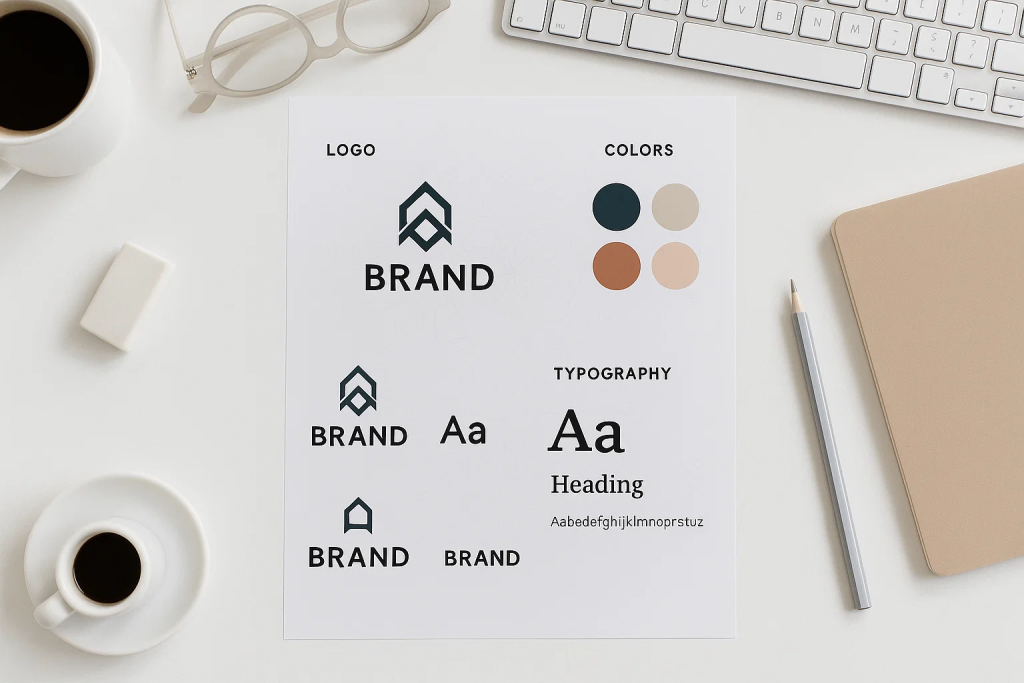
A perfect example is the Emirates NBD rebrand, where intricate elements were refined into a bold, simplified wordmark—boosting recognition and trust. Similarly, fashion retailers in City Walk are adopting mono-style logos paired with elegant typography, reflecting both sophistication and ease of application.
According to a 2025 report by WARC, “84% of high-growth GCC brands use some form of minimalist design principle across digital touchpoints.” That’s not by chance—simplified visuals increase conversion rates and are easier to animate or adapt across mobile-first channels.
From mobile apps to building signage, Dubai’s minimalism is functional, emotionally intelligent, and globally competitive.
Local Typography Takes the Lead
Typography in Dubai is becoming more than just a design element—it’s becoming a statement of cultural fluency. As the region grows more design-conscious, the use of bilingual typography (Arabic and English) has matured from functional necessity to aesthetic innovation.
Modern Dubai brands are embracing Arabic-Latin hybrids and geometric typefaces that balance legibility with elegance. This trend caters to the pain point: “Do style guides really need to include typefaces if we’re a small brand?” The answer is a resounding yes—because typography defines tone, especially in a market where brands must speak across languages and cultures.
One rising favorite is the Dubai Font, initially commissioned by the Executive Council of Dubai. It’s now a staple in both corporate and government communication for its clean, adaptable form. Meanwhile, startups are using custom calligraphy-based type to establish cultural relevance while maintaining tech-savvy vibes.
In luxury fashion, brands are leaning on serif-based Arabic scripts with vertical refinement. For fintech and tech startups, sans-serif modular typefaces inspired by Latin grids but adapted for Arabic are the go-to.
“I was skeptical about paying extra for custom type. But our bilingual brand now looks seamless—our pitch deck alone won over three clients.” — Post from r/StartupsUAE
Logo Authenticity: Tradition Meets Modernity
Dubai’s most iconic logos often carry stories beneath the surface—symbols that blend cultural heritage with cutting-edge design. As branding shifts from decorative to narrative-driven, logos in Dubai are becoming vehicles of cultural memory and innovation.
The Dubai Tourism logo is a classic case: it fuses modern sans-serif type with an abstracted dhow sail—an homage to trade heritage. This fusion of old and new is now a dominant visual code across retail, real estate, and tech.
Startups and legacy firms alike now seek visual marks rooted in Emirati motifs—from date palms to mashrabiya screens. But the execution is evolving: today’s logos feature geometric abstraction, responsive scaling, and dynamic variations that can animate across media.
This trend answers a critical user pain point: “How do I ensure my logo doesn’t look generic?” The solution? Use local iconography to inject originality while keeping forms clean and versatile.
According to a 2024 DesignRush UAE report, logos that incorporate localized design cues enjoy 23% higher brand recall among GCC consumers.
Color Palettes Reflecting Emirati Identity
Color is cultural currency in Dubai—and modern brand style uses it to evoke trust, heritage, and ambition. From desert hues and coral sands to jade domes and gold filigree, today’s visual branding is coded with meaning.
In Dubai, a warm, sun-drenched palette isn’t just aesthetic; it evokes Emirati architecture, landscapes, and even attire. For example, banks and real estate developers are increasingly using date-palm green and dune beige, while technology startups often opt for muted teal or burnt copper to signal modernity without erasing local relevance.
Pain points addressed here include: “How do I avoid cliché or generic color choices?” and “Can I use traditional colors in a modern way?” The answer lies in reinterpretation: subtle gradients, color layering, and responsive palettes help brands maintain cultural fluency while pushing modern appeal.
According to a 2024 survey by Dubai Design Week, 67% of respondents said they associate earth-tone palettes with trust and authenticity in brand design.
Luxury brands are also moving toward muted golds and espresso tones, often inspired by the interiors of Emirati majlis, while hospitality brands like Jumeirah Group use ocean-inspired tones to root themselves in Dubai’s coastal heritage.
Motion Branding Becomes the Norm
Motion is no longer an optional enhancement—it’s the heartbeat of brand communication in Dubai. As screens dominate consumer touchpoints, from metro stations to mobile apps, motion branding adds dynamism and interactivity to visual identities.
Brands are now investing in logo animations, micro-interactions, and video-led storytelling. Motion communicates tone, emotion, and function faster than static visuals. And for digitally native startups, it’s an essential tool for standing out in crowded feeds.
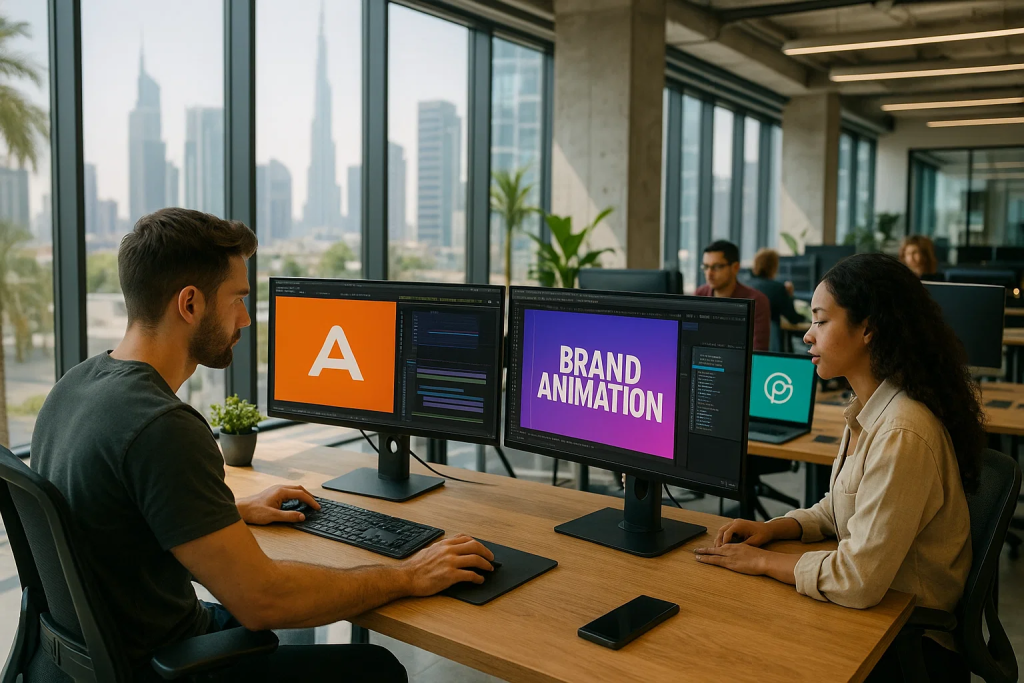
Agencies like Tonic International and Prototype Interactive are leading this charge—delivering visual systems designed to move. From animated intros for pitch decks to dynamic type on product pages, motion helps brands feel alive and adaptive.
User pain points tackled include: “Why does our brand feel flat on social media?” or “Our app looks static—how do we make it feel premium?” Motion solves this by enhancing user experience while increasing brand recall.
A 2023 study by Motion Design UAE reported that animated brand assets improve digital engagement by 52% over static counterparts.
The Role of Brand Style Guides in UAE Businesses
In Dubai’s fast-evolving brandscape, a style guide isn’t just a reference—it’s a strategic asset. From SMEs to government bodies, UAE organizations now rely on detailed brand manuals to ensure consistency across digital, print, environmental, and immersive formats.
A well-crafted style guide outlines more than logos and colors—it defines tone of voice, image style, iconography, animation rules, and even AR or spatial use cases. This is particularly vital in the UAE’s bilingual (Arabic/English) context, where misalignment can quickly erode trust.
One of the key pain points brand managers cite is: “Our social posts don’t match our website.” A unified brand style guide solves this, eliminating inconsistencies while speeding up design and approval workflows.
Dubai’s top agencies like Skyne and Unisono now include brand governance training as part of deliverables. These ensure internal teams and partners can scale brand visuals without creative drift.
According to LinkedIn MENA’s 2024 Brand Leadership Survey, 72% of UAE marketers who adopted style guides saw improved brand recognition within six months.
“Our team used to struggle with what font or image style to use. Since launching our guide, we onboard freelancers in half the time.” — Marketing lead from r/DubaiContentOps
FAQ
1. What is the most common branding mistake businesses in Dubai make?
Many companies launch without a brand style guide, leading to inconsistencies across platforms. As one Redditor put it: “Our logo looked different on every brochure—we didn’t even know what our primary color was.” Establishing a core visual system early prevents confusion and builds trust.
2. How much does professional branding cost in Dubai?
Branding costs vary, but expect AED 30,000–100,000 for a full identity with documentation from top agencies. Boutique firms like Marrow may offer creative direction for less, while global agencies like Landor command premium rates.
3. Do Dubai brands need bilingual logos and typography?
Absolutely. With Arabic and English in daily use, effective Dubai branding often includes bilingual typefaces and dual layout systems. Typography choices must balance legibility with style across both scripts.
4. Can startups afford motion branding?
Yes. Tools like LottieFiles and Adobe After Effects make animated logos and micro-interactions more accessible. Some UAE agencies even offer motion as part of design packages, especially for tech and app-first brands.
5. What trends are emerging in visual branding for 2026?
Expect a rise in responsive branding—where logos adapt to screen size and medium—and greater use of AI-generated textures and live brand avatars. Dubai’s design scene is already pioneering these with digital-first launches in Web3 spaces.
Conclusion
Dubai is setting the benchmark for visual branding in the Middle East—and increasingly, the world. From minimalist identities and rich local symbolism to motion-first experiences and metaverse assets, the city’s brands are designing the future in real time.
If you’re building or refreshing your identity, following these trends isn’t just smart—it’s essential. Whether you’re crafting a startup in DIFC or managing a legacy retail name, Dubai’s design landscape offers inspiration, innovation, and impact.
Brand style here isn’t just aesthetic—it’s strategic, scalable, and deeply rooted in cultural fluency.
 By, velthangam s
 - August 26, 2025
- 791
- Marketing & Advertising
- 0 comment
 Chat for Paid Ads