
Top 10 Agencies in Dubai for Structural Brand Packaging and Innovation
Introduction
Brand structural packaging sits at the intersection of engineering, sustainability, and visual branding & design. It is not merely a container—it’s a tactile representation of a brand’s identity, purpose, and market positioning. According to a McKinsey report, 70% of consumers admit that packaging heavily influences their buying decisions, especially in retail environments where visual cues are critical.
Our Marketing Agency Ranking Methodology
- Strategic Expertise – 25%
- Campaign Performance – 20%
- Creative Innovation – 15%
- Client Portfolio – 15%
- Industry Reputation – 15%
- ROI Focus – 10%
Scoring logic: Agencies are ranked based on strategy depth, campaign success, creativity, and measurable business impact.
Today’s competitive landscape has pushed packaging beyond function—it now serves as a strategic brand vehicle. From structural packaging design that aligns with shelf impact to unboxing experiences that reinforce storytelling, brands can no longer afford to treat packaging as secondary. In fact, many of the most recognized branding agencies also lead in packaging structure innovation, combining aesthetics with structural engineering.
Top design-led firms often integrate principles found in Visual Branding & Design, ensuring packaging reinforces core brand attributes. This synergy ensures that form follows brand function—material, shape, layout, and typography all convey brand DNA.
Yet, a common challenge persists:
“How do I choose a structural packaging partner that balances form, function, and brand integrity?”
This guide answers that. By reverse-engineering agency signals such as portfolio strength, backlink ecosystems, awards, and case studies, we unveil the Top 10 Agencies for Brand Structural Packaging—ranked not by aesthetics alone, but by strategic and structural depth.
Why Structural Packaging Matters for Brands
The structural design of packaging influences far more than product protection—it communicates brand values, affects shelf presence, and determines unboxing experiences that shape consumer perception. Structural packaging design is a silent ambassador of the brand, one that works without words yet speaks volumes through material, form, and function.
In an increasingly saturated market, structural design has become a competitive differentiator. According to Smithers Pira, the global market for packaging structure and materials innovation is expected to exceed $1 trillion by 2028, largely due to demand for sustainable, user-centric, and brand-aligned solutions.
Why it’s a strategic asset
- Shelf Impact: Brands that invest in bold, distinctive shapes stand out in crowded aisles. Curved bottles, hexagonal boxes, or fold-flat innovations aren’t just aesthetic—they’re attention strategies.
- Unboxing Experience: Social media has made unboxing a branding moment. Packaging structure now doubles as content.
- Consumer Psychology: The tactile feel of premium paper, the snap of a magnetic box, or the structured rigidity of corrugated layers all contribute to perceptions of luxury or eco-consciousness.
- Logistical Efficiency: Well-engineered structure reduces waste, shipping costs, and storage inefficiencies.
“You can have the best branding in the world, but if your structural packaging fails under pressure—literally—it undermines consumer trust,” says Chris Do, brand strategist and educator at The Futur.
But beyond technical execution, there’s an emotional resonance. Brands now work with structural packaging agencies to tell stories through their boxes, tubes, and bottles. Consider how luxury skincare brands embed brand storytelling within the fold sequence or how FMCG brands use structural dielines to reinforce eco-friendliness.
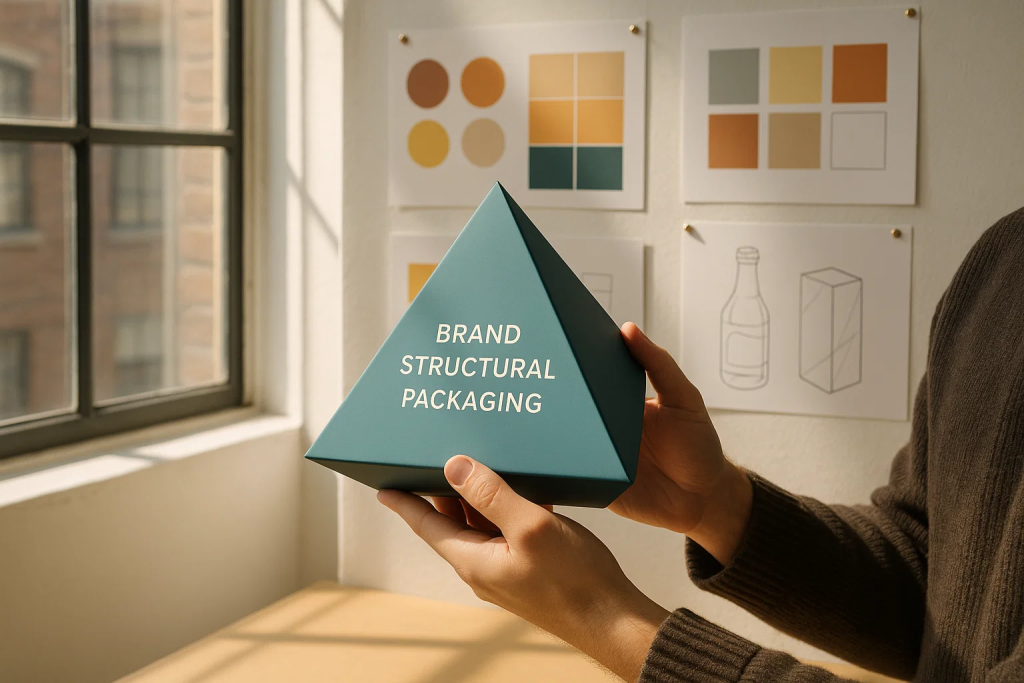
For any brand evaluating agencies, understanding this high-stakes role of structure is critical before outsourcing the work.
Methodology — Reverse‑Engineering Winners
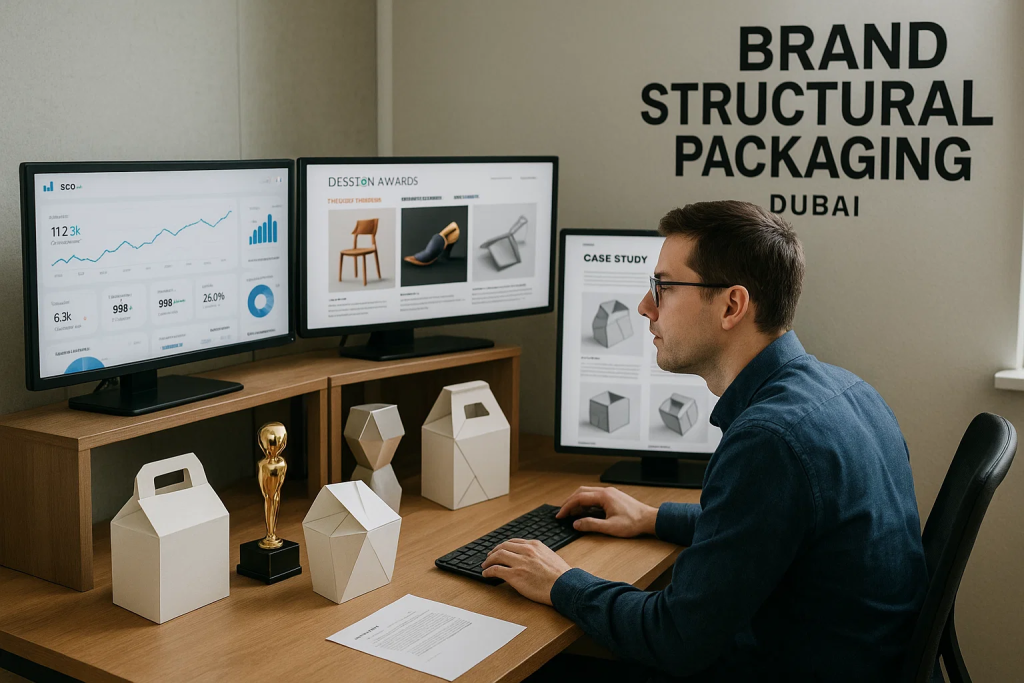
Choosing the top agencies for brand structural packaging isn’t a subjective endeavor—it demands a rigorous, data-backed approach. To build this list, we reverse-engineered agency credibility based on quantifiable signals from web analytics, design directories, awards, backlink ecosystems, and portfolio audits.
Key Metrics Used to Evaluate Agencies
1. Backlink Ecosystem & SEO Authority
High-ranking agencies in search engines for terms like “structural packaging design agency” or “custom dieline design” tend to invest in content and thought leadership. Tools like Ahrefs and SEMrush were used to analyze:
- Domain rating
- Referring domains in the packaging, branding, and retail sectors
- Mentions on design review platforms like The Dieline or Behance
“Link-building is modern reputation currency. The best agencies are cited by peers, clients, and packaging blogs alike,” — Ahrefs Content Strategy Report, 2024
2. Award Recognition & Case Study Quality
We evaluated wins in:
- Dieline Awards
- Pentawards
- Packaging Innovation Awards
- Red Dot (specifically in packaging categories)
Not just the win itself, but the strategic impact and structural innovation behind each entry mattered. We filtered for agencies with repeat wins in categories such as Sustainable Structure, FMCG, or Luxury Rigid Packaging.
3. Portfolio Strength & Vertical Focus
Rather than generalists, we prioritized agencies with vertical specialization:
- FMCG packaging structure
- Luxury cosmetic packaging
- Retail-ready corrugated design
- Subscription box optimization
We examined how agencies visually and functionally solved real-world packaging challenges.
4. Client Roster & Long-Term Partnerships
From Nestlé and L’Oréal to DTC disruptors, we evaluated the depth of relationships—not just name-dropping but the presence of iterative projects, brand overhauls, and structural series.
5. Innovation in Materials & Sustainability
Agencies deploying biodegradable substrates, zero-waste packaging formats, or supply chain-integrated structures ranked higher. We cross-checked these claims with supplier partnerships and third-party certifications.
“Agencies that design packaging with upstream and downstream logistics in mind are no longer optional—they’re strategic growth partners,” notes the Packaging Europe Sustainability Report, 2025.
This reverse-engineering methodology ensures that our list reflects objective excellence, not biased reviews or paid placements.
Top 10 Agencies — Strengths & Highlights
Each agency listed below has been selected based on verifiable excellence in brand structural packaging, including innovation in dieline development, sustainable materials, and brand-led structural ideation.
1. Red Marrow — Emotionally Intelligent Structural Packaging
Red Marrow stands out as a global benchmark for emotion-driven packaging structure. With a practice rooted in neuroscience, the agency focuses on how packaging structure influences emotional recall, shelf interaction, and perceived value.
website : https://marrow.red/
What Sets Them Apart
- Neuroscience-based structural design: Red Marrow integrates behavioral science into their dielines, often citing research on haptic feedback and visual closure to increase shelf dwell time.
- Luxury and FMCG specializations: From high-end skincare kits with magnet-locked rigid boxes to sustainable folding cartons for fast-moving goods, their range is vast and category-aware.
- Story-first packaging architecture: Structures are not just functional—they’re choreographed to reveal brand narratives progressively through the unboxing experience.
“Every fold, every tactile moment is a micro-expression of brand strategy,” says their Creative Director, featured in the Packaging Design Week panel, 2024.
Red Marrow has received multiple accolades from the Pentawards and The Dieline Awards, particularly in the Structural Innovation and Emotional Design categories. Their portfolio frequently appears in global case study decks for design educators and brand CMOs.
Sample Work
- A collapsible triangular chocolate box for a heritage brand, symbolizing mountain peaks and nostalgia.
- A fully recyclable fragrance package with inner sleeves that slide like a drawer—engineered for premium minimalism.
Industry Application
- FMCG
- Luxury wellness
- Craft food and beverage
- Subscription DTC brands

2. SmashBrand — Data-Driven Structural Packaging Performance
Website : https://www.smashbrand.com
SmashBrand is one of the few agencies that combines structural packaging innovation with in-market testing and consumer analytics. Their unique model—where prototyped structures undergo A/B testing and retail simulations—bridges creative brilliance with business outcomes.
What Sets Them Apart:
- Packaging that sells: SmashBrand doesn’t just design dielines—they validate them through neuroscience-informed eye tracking, motion analytics, and shopper surveys.
- Prototyping + testing: Their structural formats are pressure-tested in physical and digital environments before ever hitting production.
- Brand-aligned engineering: Their team includes industrial designers and brand strategists, ensuring structural decisions are aligned with storytelling and consumer usability.
“We treat packaging like a performance asset, not a pretty object. Structure influences first impressions, but also repeat behavior,” notes Kevin Smith, co-founder.
Their work has helped launch and rebrand household names across sectors—from supplements and functional drinks to CPG disruptors. Their recyclable snap-fit bottle top concept, featured in Packaging World, reduced leakage complaints by 68% for a client in the health beverage space.
Sample Work
- A multi-panel folding carton for a protein bar brand that mimics origami and reveals product benefits at each fold.
- A crush-resistant supplement bottle design with grip texture, developed for in-gym usage.
Industry Application
- Health & wellness
- Nutrition & supplements
- Consumer packaged goods
- Retail beverage and snacks
3. Pearlfisher — Structural Storytelling Through Premium Minimalism
Pearlfisher is globally recognized for elevating structural packaging into an artform of simplicity. Their approach—rooted in design futurism—prioritizes elegance, tactile nuance, and emotional clarity. Brands looking for luxury cues, sustainability, and visual restraint often gravitate to Pearlfisher’s visionary teams in London, New York, and Copenhagen.
What Sets Them Apart:
- Structural symbolism: Each package tells a brand story not through cluttered graphics, but through form, material, and experience. From tear-tabs that mimic human gestures to embossed lock mechanisms—every detail is narrative-driven.
- Luxury + sustainability: Pearlfisher redefines minimalism with eco-conscious materials like mycelium foam, stone paper, and uncoated kraft boards, all engineered into premium folds and fitments.
- Cultural fluency: Their team researches macro-trends, social shifts, and category codes to engineer packaging that feels future-relevant and locally sensitive.
“We design for how a product should feel in the hand, and how it lives in memory—not just how it looks on shelf,” said Shaun Bowen, Chief Creative Officer, during a Design Indaba keynote.
Their structural packaging for brands like Seedlip, Cadbury’s JoyPods, and Help Remedies has been featured in Dezeen, Wallpaper Magazine, and The Dieline for innovation in structural clarity and emotional tone.
Sample Work:
- A sculptural glass pack for a non-alcoholic spirit that doubles as a display piece, with a custom hollow-core base.
- A compostable pressed-paper pill blister for a wellness brand, eliminating plastic without sacrificing brand sophistication.
Industry Application:
- Luxury food & beverage
- Personal care & wellness
- Spirits and non-alcoholic drinks
- Socially conscious brands
4. Stranger & Stranger — Structural Packaging with a Sense of Theatre
Website : https://www.strangerandstranger.com
Stranger & Stranger specializes in alcoholic beverage packaging and brings an unapologetically bold, theatrical approach to structural design. Their work is known for immersive storytelling through both surface and shape—bottle design, engraved embossing, and unorthodox dielines that make their clients’ products unmissable.
What Sets Them Apart
- High-drama dielines: Their structural packaging often features bespoke glass molds, sarcophagus-style boxes, and laser-cut reveals. Every element is dramatic, layered, and sensorial.
- Integrated branding + structure: The shape of the bottle, the opening mechanism, and the tactile texture all narrate the brand ethos—whether it’s mysticism, rebellion, or luxury.
- Collectors-first thinking: Many of their packaging structures are keepsake-worthy, designed not only for retail impact but also for shelf life in home bars and gifting scenarios.
“We’re not selling packaging. We’re selling mystique—something that begs to be picked up, uncorked, and remembered,” said Kevin Shaw, founder, in The Spirits Business Interview.
Their client roster includes giants like Jack Daniel’s, Proximo Spirits, and The Kraken Rum. One of their standout projects, Bulleit Tattoo Edition, used both structure and texture as a cultural conversation starter.
Sample Work
- A coffin-style rigid box for a mezcal brand, featuring aged metal hinges and leather wrap-around.
- A custom glass bottle designed to resemble ancient potion vessels, complete with an asymmetrical pour spout.
Industry Application
- Wine & spirits
- Craft alcohol brands
- Luxury gifting
- Limited-edition packaging
5. Bulletproof — Bold, Strategic Structural Packaging for Global Brands
Website : https://www.wearebulletproof.com
Bulletproof is a global creative agency known for pairing bold branding with structural packaging strategy across CPG, food, and personal care. Their design ethos is rooted in commercial creativity—a deliberate fusion of function, storytelling, and scalability.
What Sets Them Apart:
- Integrated brand + pack architecture: Bulletproof ensures structural formats don’t just hold product—they amplify core brand values. Think of a whisky bottle that pours slower to encourage ritual, or snack packaging that opens with a tactile “snap” tied to freshness.
- Functionality with edge: They design rigid boxes, flexible film folds, and retail displays that reflect cultural relevance while addressing pain points like recyclability, child-safety, or shelf-space constraints.
- Category reinvention: Their work often flips category norms. A functional dairy product can look like skincare. A protein shake becomes a collectible artifact.
“Structure isn’t just about form—it’s about behavioral design,” shared Bulletproof’s Executive Creative Director during a Brand New Conference keynote.
Bulletproof’s structural packaging for brands like Cadbury, Heinz, Diageo, and Arla has been praised for bringing clarity to complex brand portfolios. Their Kids Range Packs for Danone were lauded for easy grip, portion control, and recyclable simplicity.
Sample Work
- A dual-chamber yogurt pouch with snap-to-mix functionality for an active lifestyle line.
- A slanted-top cereal box that improves visibility and reduces stack damage during shipping.
Industry Application
- Global FMCG
- Snacks & nutrition
- Alcohol & beverages
- Child-safe consumer products
6. CF Napa — Structural Packaging for Premium Wine & Spirits
CF Napa Brand Design brings structural elegance and tactile detail to the world of premium and ultra-premium alcoholic beverages. Nestled in the heart of Napa Valley, their deep industry insight and material fluency make them a go-to for wineries, distilleries, and artisanal brewers looking to create packaging with high perceived value and collectibility.
Website : https://www.cfnapa.com/
What Sets Them Apart
- Glass mold innovation: CF Napa frequently partners with glass manufacturers to develop custom bottles with signature curves, debossing, and weighted bases that signal premium quality.
- Integrated storytelling: Their structural packaging doesn’t just look good—it narrates terroir, tradition, and craftsmanship through thoughtful material cues.
- Shelf-to-cellar design: Many of their packaging systems are designed not only for retail impact but for home storage, gift-giving, and wine club presentation.
“Our structures invite people to hold, to feel, to keep. That’s where brand memory lives,” said CF Napa’s design director in an interview with Packaging of the World.
They’ve won over 100 packaging design awards, including honors from Graphis, Mobius, and San Francisco World Spirits Competition. Their work for Frank Family Vineyards and Mumm Napa has become iconic in the wine space.
Sample Work
- A custom decanter-style whiskey bottle with wax-dipped cork and layered paper seal.
- A nested rigid box for a rosé trio, each bottle secured in a sculpted mold under a magnetic closure lid.
Industry Application
- Wine & spirits
- Boutique alcohol brands
- Limited-edition product runs
- Luxury packaging for export markets
7. Studio One Eleven — Packaging Structure Embedded in Manufacturing
Website : https://www.studio111design.com
Studio One Eleven, the design arm of Berlin Packaging, is uniquely positioned at the intersection of structural packaging design and real-world manufacturability. Unlike purely conceptual firms, they specialize in bringing packaging ideas to life at scale—efficiently, affordably, and beautifully.
What Sets Them Apart
- Design-for-manufacture DNA: Their in-house teams co-create with engineers, suppliers, and brand teams to ensure that dielines and bottle molds are production-ready from day one.
- Rapid prototyping & material science: Studio One Eleven offers CAD prototyping, 3D printed structural mockups, and material advisory on sustainability, recyclability, and cost efficiency.
- Cross-category breadth: They’ve designed structures for everything from OTC pharmaceuticals to household cleaners, balancing regulatory requirements with brand differentiation.
“Too often, structure is divorced from the reality of logistics. We bridge dream and delivery,” said Eric Steigelman, head of structural innovation.
Their award-winning work includes proprietary bottle shapes, easy-pour spouts, and child-resistant mechanisms that meet global compliance while elevating brand appeal.
Sample Work
- A stackable, dual-compartment cleaning bottle with an ergonomic grip.
- A line of airless pump cosmetic bottles designed for extended shelf life and zero waste.
Industry Application
- Health & personal care
- Industrial & household products
- Pharma & wellness
- Private label packaging systems
8. JDO — Sensory-First Structural Packaging for Premium FMCG
Website : https://www.jdo.co.uk
JDO is renowned for creating emotionally immersive packaging structures that engage not only visually—but through touch, sound, and motion. Their focus is on multi-sensory interaction, making them a top choice for premium FMCG brands seeking deeper emotional resonance and brand recall.
What Sets Them Apart:
- Tactile storytelling: Every structural choice—from hinge stiffness to surface resistance—is choreographed to evoke a brand feeling. They often experiment with contrasting textures, coated board stocks, and interlocking closures.
- Global sensibility, boutique precision: With studios in the UK and US, JDO blends large-scale trend fluency with boutique-level craftsmanship. They serve both startups and global conglomerates with equal detail.
- Brand elevation through structure: Their work transforms ordinary form factors into status-signaling packaging systems, often incorporating audiovisual elements (e.g., the satisfying “click” of a premium closure).
“Structure is our handshake with the consumer. We want that first touch to feel like a promise kept,” said Paul Drake, JDO co-founder.
JDO’s work with brands like Tango, Cornetto, and Diageo has won recognition in Transform Awards, FAB Awards, and The Dieline. Their projects often include packaging audits where existing structural formats are rebuilt from scratch based on consumer testing.
Sample Work
- A dual-layer sleeve for an energy drink with micro-ridged embossing for grip and thermal retention.
- A refillable haircare bottle with a magnetic cap and a mirrored vertical shelf orientation to enhance bathroom presence.
Industry Application
- Premium FMCG
- Beauty and personal care
- Lifestyle beverage brands
- Youth-oriented packaging
9. Turner Duckworth — Iconic Structure Meets Visual Identity
Website : https://www.turnerduckworth.com
Turner Duckworth is widely known for its iconic visual identity work—but behind their stunning graphic systems lies a deep mastery of structural packaging design that translates brand essence into form. Their packaging solutions are often minimalist on the outside but engineered for maximum brand recognition and tactile delight.
What Sets Them Apart
- Structure as identity extension: Rather than treat packaging shape as a neutral shell, Turner Duckworth integrates visual systems—color, shape, material—into structural forms that reinforce brand codes at a glance.
- Emotionally sticky form factors: Their packs are often described as “Instagrammable” not because they chase trends, but because they anchor brands in ritual and recognition.
- Award-winning restraint: Known for working with major legacy brands like Coca-Cola, Amazon, and Campbell’s, they bring elegant restraint and strategic clarity even to the most ubiquitous formats.
“The best structures feel inevitable—like there’s no other way it could’ve been,” said David Turner in a Creative Review interview.
Their redesign of Coca-Cola’s secondary packaging and Amazon’s private-label food structures are considered benchmarks in brand-simplified packaging systems that scale globally but retain character.
Sample Work
- A pillowed-edge pack for snack foods that softens retail appearance and mimics comfort.
- A rigid tin system for tea storage that uses negative space and cutout forms for maximum shelf distinctiveness.
Industry Application
- Global CPG brands
- Legacy brand refreshes
- Shelf-dominant categories
- E-commerce packaging systems
10. Depot Branding Agency — Strategic Packaging Structure from Eastern Europe
Website : https://depotbranding.ru/en
Depot is Russia’s most internationally acclaimed branding agency, known for blending high-concept storytelling with cost-effective structural packaging design. Their work is widely celebrated in Eastern Europe and Asia for its visual intelligence, modular formats, and deep cultural cues.
What Sets Them Apart:
- Culturally adaptive structures: Depot engineers packaging to communicate across regions, using local symbolism, color psychology, and modular dielines that adapt to different SKUs or languages with structural fluidity.
- Economic elegance: While many agencies push high-cost materials, Depot excels in budget-optimized structural innovation. Their packaging for dairy, confections, and pharma is often produced on tight margins—without compromising impact.
- Award-dense portfolio: Their structural packaging has won over 150 awards, including Red Dot, Pentawards, and Transform Awards. Depot is often featured in World Brand Design Society case studies.
“Designing in constraints is not a limitation—it’s where culture and brand intersect most powerfully,” said Alexey Andreev, Managing Partner, during a Pentawards interview.
Sample Work
- A modular juice pack series using wedge-shaped cartons that stack into fruit patterns on shelves.
- A pharmaceutical packaging line that opens like a flower, reinforcing wellness with soft geometry.
Industry Application
- Food & dairy
- Pharmaceuticals & supplements
- Regional FMCG
- Export-focused packaging
How to Choose the Right Agency for You
Selecting the right brand structural packaging agency is about far more than admiring award-winning portfolios. The ideal partner aligns with your brand’s category, growth stage, budget, and strategic goals—while solving for logistical realities like shelf-fit, sustainability, and manufacturability.
1. Define Your Packaging Objectives
Ask yourself:
- Is your priority shelf presence, unboxing experience, shipping optimization, or material innovation?
- Do you need long-term partnership or a project-specific sprint?
- Are you solving a rebranding challenge, product extension, or new product launch?
Each agency excels in a different niche. For instance:
- Red Marrow is perfect for emotion-led, high-concept packaging.
- Studio One Eleven is a go-to for CPG brands needing structure embedded in manufacturing.
- Depot thrives under budget and regional adaptation constraints.
2. Match by Industry & Use Case
Some firms are boutique specialists in:
- FMCG packaging (JDO, Bulletproof)
- Luxury and spirits (Pearlfisher, CF Napa, Stranger & Stranger)
- Pharma and personal care (Studio One Eleven, SmashBrand)
Others, like Turner Duckworth, excel at reimagining legacy packaging systems for multinational portfolios.
3. Evaluate Agency Chemistry & Processes
- Do they use prototyping and testing like SmashBrand?
- Are they accessible for your time zone and production partners?
- Do they include structural engineers early—or hand it off later?
Tip: Request their R&D process, not just a case study reel.
4. Budget Honestly—But Strategically
You don’t have to afford Pearlfisher to have great packaging. Budget-friendly doesn’t mean generic:
- Depot creates culturally resonant work on modest budgets.
- Studio One Eleven bundles design with manufacturing savings.
But skimping too far can backfire. Structural packaging mistakes are costly to fix post-production—think mold reworks, wasted inventory, and failed retail launches.
5. Ask the Right Questions
Include these in your RFP:
- Can you share a failed structure and what you learned?
- How do you validate dielines with consumers or retailers?
- How early do you involve logistics and production teams?
Choosing right means choosing fit, not just fame. The right agency will think beyond packaging—they’ll think like a brand builder.
Structuring Your Brief to Agencies
A well-prepared brief is the bridge between brand vision and packaging success. Without it, even the most talented agencies may struggle to deliver work that fits your needs—structurally or strategically. A strong packaging brief aligns business goals, brand essence, and technical constraints into one actionable document.
What to Include in a Structural Packaging Brief
1. Project Background & Brand DNA
- What’s the core brand story?
- How should the structure feel, sound, and function?
- Which emotional cues are important (e.g., protection, indulgence, minimalism)?
“Agencies aren’t just building boxes—they’re building trust. That only works when they understand your narrative,” says Lisa Hastings, author of Packaging as Storytelling.
2. Structural Functionality Requirements
- Is it retail-ready or DTC?
- Does it need to be stackable, tamper-evident, child-resistant, or easy-pour?
- What are the key challenges (e.g., cold chain, sustainability, product fragility)?
3. Target Market + Retail Environment
- Where will it be displayed? (Supermarket, boutique, e-commerce, etc.)
- Who’s the user? (Teen consumer, parent, luxury shopper?)
Structure must solve for context: Is it tossed in a cart or ceremonially unboxed?
4. Material Constraints & Sustainability Goals
Include specific material preferences:
- Recyclable board stock
- Biodegradable laminates
- PET vs glass vs rigid box options
Be clear about CO2 reduction goals or local manufacturing needs.
5. Production & Logistics Parameters
- MOQ (Minimum Order Quantity)
- Palletization specs
- Flat-pack vs pre-assembled
- Shipping destination and unit weight limits
FAQ
1. How much does hiring a structural packaging design agency cost?
Costs vary widely. Boutique studios may start at $8,000–$15,000 per SKU, while global agencies like Pearlfisher or Bulletproof often charge $25,000–$75,000+ depending on deliverables, prototyping, and IP rights.
2. What’s the difference between a branding agency and a structural packaging firm?
Branding agencies focus on strategy, identity, and messaging, while structural packaging firms specialize in form, material, and manufacturing feasibility. Some agencies, like SmashBrand or Studio One Eleven, offer both in-house.
3. Can structural packaging support sustainability goals?
Absolutely. Agencies like CF Napa and Depot now integrate recyclable materials, compostable boards, and zero-waste dielines. Sustainable structure not only reduces footprint—it tells a responsible brand story.
4. How do I know if a dieline is production-ready?
Only structural engineers or printers can confirm that. Always ask your agency to provide:
- CAD-ready dielines
- Flat and 3D mockups
- Material specs with tolerances
Reddit insight: “Our dieline looked sexy until our manufacturer said it required a $5k tooling plate. Always double check.” – u/boxboxed
5. Do agencies in Dubai offer top-tier structural packaging?
Yes. Many Dubai-based firms are now global contenders, often integrating Visual Branding & Design with structural integrity. You can explore this curated list of agencies in Dubai as a benchmark.
Conclusion
Choosing the right brand structural packaging agency is one of the most critical—and most overlooked—decisions in the product development journey. It’s not just about how your product looks on a shelf. It’s about how it feels in hand, how it tells your brand story, and how it navigates the logistics of the real world.
From neuroscience-backed storytelling at Red Marrow to sensory-forward experiences from JDO, and supply chain-savvy builds from Studio One Eleven, the top 10 agencies featured here span every angle of structural innovation.
Whether you’re a DTC startup aiming for viral unboxing, or a global FMCG brand managing multi-region logistics, there is a structural partner for you. The key is to be clear, strategic, and collaborative from the start—through your brief, your expectations, and your budget.
Because the structure of your packaging isn’t just about holding your product.
It’s about holding attention, delivering trust, and building brand memory—one fold at a time.
 By, Shreefa Junaith
 - August 7, 2025
- 382
- Marketing & Advertising
- 0 comment
 Chat for Paid Ads